Curious about Trataka gazing Meditation? Learn how this powerful candle gazing practice can sharpen focus, calm the mind, and support personal growth. In today’s fast-paced world, peace of mind and inner calm often seem difficult to find. One of the biggest challenges many people face is maintaining focus.
Even simple tasks can become difficult when the mind is constantly distracted. This is where the practice of Trataka gazing Meditation can be incredibly beneficial.
Trataka is an ancient yogic technique that helps improve concentration, enhance focus, and cultivate a sense of inner calm.
The practice involves gazing steadily at a single fixed point, such as a candle flame, without blinking for as long as comfortably possible.
As the mind becomes absorbed in the object of focus, unnecessary thoughts gradually begin to settle, creating greater mental clarity and stability.
Although Trataka shares similarities with traditional meditation, it is often regarded as a more powerful concentration practice within yogic traditions.
When combined with other yogic techniques, its effects can become even more profound and transformative.
I have personally practiced Trataka for more than eight years. I initially began this practice simply to keep my mind calm and focused during my studies.
However, over time, I experienced remarkable changes that encouraged me to continue exploring it more deeply. Beyond improving concentration, Trataka helped me develop greater self-awareness and a stronger connection with my inner world.
Many practitioners believe that regular Trataka practice strengthens the connection between the mind and body. As concentration improves, you become more aware of your thoughts, emotions, and behavioral patterns.

This growing self-awareness is one of the key reasons why Trataka has gained increasing popularity around the world in recent years.
Another unique aspect of Trataka is its potential to activate the subconscious mind.
Through consistent practice, many people report enhanced intuition, improved mental clarity, and a deeper understanding of themselves. Even dedicating just fifteen minutes a day to this practice can lead to meaningful changes over time.
If you are looking to improve your focus, deepen your meditation practice, or explore an ancient yogic technique that promotes self-awareness and mental discipline, Trataka gazing Meditation may be worth exploring.
In this article, you’ll learn everything you need to know about this powerful practice and how to get started safely and effectively.
- Definition, History, and Origin of Trataka gazing Meditation
- How Does Trataka gazing Meditation Work?
- Types of Trataka gazing Meditation
- Benefits of Trataka gazing Meditation
- How to Practice Trataka Meditation Step by Step
- Common Beginner Mistakes to Avoid
- How Long Should You Practice Trataka Meditation?
- My Personal Experience with Trataka Meditation
- Common Trataka gazing Meditation Mistakes and How to Avoid Them
- Common Myths about Trataka gazing Meditation
- Who Should Avoid Trataka gazing meditation?
- 1. What Is Trataka Meditation?
- 2. Is Trataka Safe?
- 3. Can I Practice Trataka Every Day?
- 4. How Long Does It Take to See Results?
- 5. Can Trataka Improve Concentration?
- 6. Can Beginners Practice Trataka?
- 7. What Is the Best Object for Trataka?
- 8. Is Candle Trataka Better Than Bindu Trataka?
Definition, History, and Origin of Trataka gazing Meditation
Trataka is an ancient yogic practice that combines concentration and mental purification through steady gazing.
The word Trataka comes from the Sanskrit language and means “to look steadily” or “to gaze with focused attention.”
In its simplest form, Trataka involves fixing your eyes on a single point, such as a candle flame, a black dot, a symbol, or another object, without blinking for as long as possible.
The purpose is not just to train the eyes but also to calm the mind and develop deeper awareness.
In traditional yoga, Trataka gazing meditation is considered both a cleansing practice and a concentration technique.
It is one of the purification methods described in classical yogic teachings and is often used to clear mental distractions while strengthening focus.
By keeping the gaze fixed on one object, practitioners gradually learn to control wandering thoughts and improve mental stability.
The roots of Trataka can be traced back to ancient yogic traditions, particularly the teachings of Hatha Yoga.
Classical yoga texts describe Trataka as an important practice for preparing the mind for meditation and higher states of awareness.
For centuries, yogis and spiritual seekers have used this technique to sharpen concentration, develop inner discipline, and deepen their spiritual practice.
Before modern meditation methods became popular, Trataka was widely practiced as a way to strengthen attention and cultivate a calm, focused mind.
Even today, it remains an important part of meditation training because it helps practitioners develop one-pointed concentration, a skill that supports both spiritual growth and everyday mental clarity.
Its simplicity, combined with its powerful effects on focus and self-awareness, is one reason why Trataka continues to be practiced around the world.
How Does Trataka gazing Meditation Work?
To achieve success in Trataka gazing Meditation, it is important to understand both the scientific principles and the traditional yogic philosophy behind the practice.
During Trataka, the eyes remain steadily focused on a single point, which helps train attention and improve concentration. As the mind becomes absorbed in one object of focus, mental distractions gradually decrease, often creating a sense of calm and mental clarity.
One of the reasons many practitioners find Trataka effective is that it actively engages both the eyes and the mind. By directing your attention toward a fixed point, you reduce external distractions and encourage the mind to remain centered.
Over time, this can strengthen focus, improve mental discipline, and promote greater awareness of your thoughts and emotions.
Trataka is often compared to traditional meditation practices. In many forms of meditation, practitioners close their eyes and observe their thoughts without attachment.
However, beginners frequently find it challenging to maintain focus because the mind tends to wander. Trataka provides a visual anchor, making it easier for many people to concentrate and develop mental stability.
This is one reason why it is commonly recommended as a preparatory practice for deeper meditation.
From a spiritual perspective, Trataka has been valued for centuries in yogic traditions as a powerful tool for self-awareness and inner growth.
Many practitioners believe that regular practice helps strengthen the connection between the body, mind, and deeper levels of consciousness.
While individual experiences vary, some people report enhanced intuition, increased mental clarity, and a greater sense of inner peace.
In my own experience, Trataka has often produced results more quickly than conventional meditation practices.
While general meditation can sometimes feel challenging due to the constant flow of thoughts, the fixed point of focus in Trataka makes it easier to settle the mind and maintain concentration.
This structured approach has helped me develop greater mental discipline and consistency in my daily practice.
Understanding both the scientific and spiritual dimensions of Trataka before you begin can greatly improve your practice.
When approached with patience, consistency, and proper guidance, Trataka can become a valuable tool for improving concentration, cultivating inner calm, and deepening your meditation journey.
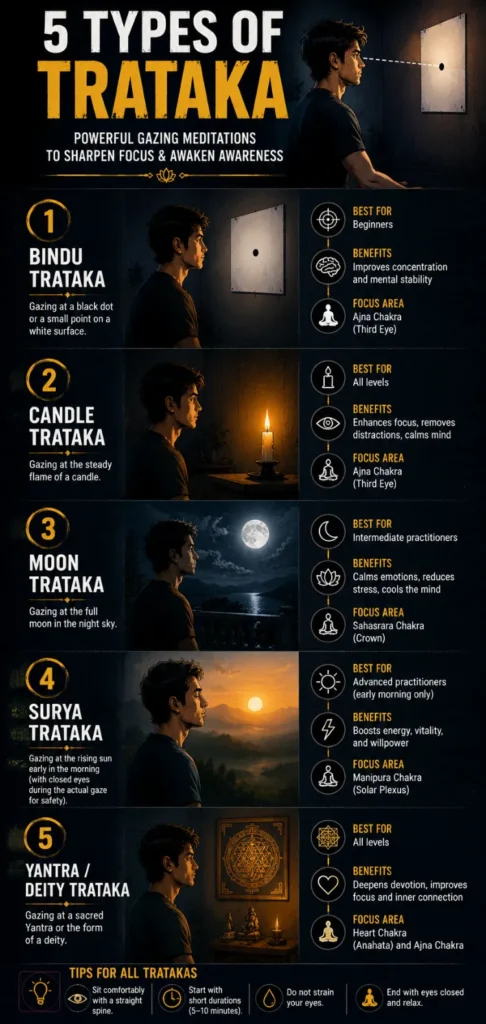
Types of Trataka gazing Meditation
Trataka gazing Meditation is generally classified into three main categories:
- Bahir or Near Trataka – Focusing on an object located close to the practitioner.
- Distant Trataka – Focusing on an object positioned at a greater distance.
- Antar (Internal) Trataka – Visualizing an object internally after concentrating on it with open eyes.
Most Trataka techniques described in yogic texts and modern meditation guides fall within one of these three categories.
- Near Trataka is typically practiced indoors using a fixed object placed at eye level.
- Distant Trataka involves focusing on objects located far away, such as the moon, a mountain peak, or a distant point on the horizon.
- Antar Trataka is considered a more advanced practice, where the practitioner first concentrates on an external object and then continues observing its mental image with closed eyes.
Over the years, several forms of Trataka have become popular among meditation practitioners.
Each technique uses a different object of focus, but the underlying principle remains the same—developing concentration and mental stability through steady gazing.
1. Bindu Trataka (Dot Gazing)
Bindu Trataka involves focusing on a small dot, usually black in color, drawn on a wall, board, or sheet of paper. It is one of the simplest and most beginner-friendly forms of Trataka.
The practice helps train attention and develop visual concentration.
Read : How to do Bindu Tratak Meditation
2. Candle Trataka (Jyoti Trataka)
Candle Trataka is one of the most widely practiced forms of Trataka gazing Meditation. In this technique, the practitioner gazes steadily at the flame of a candle without blinking.
According to yogic traditions, regular practice can improve concentration, mental clarity, and inner awareness. Many practitioners also find the flame easier to focus on than a stationary object.
Read : Untold Truth and Risk about Candle Gazing Meditation No one tell You
3. Mirror Trataka
Mirror Trataka involves gazing at your own reflection, usually focusing on the eyes. This practice is traditionally associated with self-observation and heightened self-awareness.
Some spiritual traditions also believe it can help develop confidence, willpower, and a deeper understanding of one’s inner self.
Read : Top 5 Reason why Mirror meditation is so much powerful practice than other
4. Yantra Trataka
Yantra Trataka is performed by focusing on sacred geometric symbols such as the Sri Yantra. In yogic and tantric traditions, yantras are considered tools for meditation and spiritual contemplation.
Practitioners use them to deepen concentration and cultivate a more focused state of mind.
Read : Spiritual benefit of Sri Yantra Meditation
5. Chandra Trataka (Moon Gazing)
Chandra Trataka involves gazing at the moon, typically during a clear night. Since the moon is a distant object, this practice falls under Distant Trataka.
Traditional yogic teachings associate moon gazing with calmness, emotional balance, and mental relaxation.
In addition to these popular methods, there are many other Trataka practices that use different objects of focus, including sacred symbols, natural elements, and spiritual images.
The choice of object often depends on the practitioner’s goals, experience level, and spiritual tradition.
At its core, Trataka is a concentration practice that trains the mind to remain focused on a single point. With regular practice, this simple yet powerful technique can help improve attention, mental discipline, and meditation skills.
Read : Deep connection between Moon Phases and Magical Workings
Benefits of Trataka gazing Meditation
The benefits of Trataka gazing Meditation go beyond simply improving eyesight or concentration. With consistent practice, it can help develop mental clarity, stronger focus, self-discipline, patience, and greater self-awareness.
This combination of practical and personal benefits is one reason why Trataka continues to be valued by yogis, meditation practitioners, and people seeking inner growth around the world.
Improves Concentration
One of the most well-known benefits of Trataka gazing Meditation is its ability to improve concentration. During the practice, you keep your eyes fixed on a single point, usually a candle flame, without allowing your attention to wander.
In the beginning, this can feel challenging because the mind naturally jumps from one thought to another.
However, with regular practice, you gradually train your mind to stay focused on one thing for longer periods.
This improved concentration can be helpful not only during meditation but also while studying, working, reading, or performing daily tasks that require mental attention.
Strengthens Mental Focus
While concentration and focus are closely related, focus is about maintaining attention despite distractions. Trataka helps strengthen this ability by teaching the mind to return to the chosen object whenever it drifts away.
Over time, you become less affected by external distractions and random thoughts.
Many practitioners notice that they can stay engaged in important tasks more easily and complete them with greater efficiency.
This stronger mental focus can be especially valuable in today’s world, where constant notifications and distractions compete for our attention.
Develops Self-Discipline
Trataka is a simple practice, but it requires patience and consistency. Sitting quietly and maintaining a steady gaze every day helps build self-discipline.
There may be days when you feel distracted or unmotivated, yet continuing the practice teaches commitment and mental control.
As this discipline grows, it often carries over into other areas of life, helping you stay dedicated to personal goals, healthy habits, and long-term projects.
Reduces Mental Clutter
Many people experience a constant stream of thoughts throughout the day.
Worries about the future, memories of the past, and endless mental chatter can make it difficult to feel calm.
Trataka provides a break from this mental noise by giving the mind a single point of focus. As your attention settles on the object, unnecessary thoughts gradually lose their hold.
Regular practice can create a greater sense of mental clarity, making it easier to think clearly and feel more present in the moment.
Enhances Self-Awareness
Trataka is more than an eye-gazing exercise; it is also a practice of observing the mind. As you focus on the object, you begin to notice your thoughts, emotions, and reactions more clearly.
This increased awareness can help you understand your habits, thought patterns, and emotional responses.
Over time, this deeper self-awareness can support personal growth and help you make more conscious choices in everyday life.
Improves Visualization Skills
After the external gazing phase of Trataka, many practitioners close their eyes and focus on the mental image of the object they were observing.
This process naturally strengthens visualization abilities. With regular practice, you may find it easier to create and hold clear mental images.
Strong visualization skills can be useful in meditation, creative work, goal-setting, and other practices that require imagination and mental focus.
Supports Meditation Practice
Many people struggle with meditation because their minds feel restless and difficult to control.
Trataka can serve as an effective preparation for deeper meditation. By training the mind to focus on a single object, it becomes easier to enter a calm and meditative state.
As concentration improves, sitting quietly for longer periods often feels more natural and less frustrating. This is one reason Trataka has been used for centuries as a preparatory practice in traditional yoga and meditation systems.
Helps Build Patience
In a world that often encourages instant results, Trataka teaches the value of patience. Progress develops gradually through regular practice rather than overnight success.
Learning to sit still, maintain focus, and accept small improvements over time can strengthen patience both on and off the meditation cushion.
Many practitioners find that this patient mindset helps them handle challenges, setbacks, and daily frustrations with greater calmness and understanding.
Read : 5 Amazing Benefit Of Tap Into Deep Meditation State And Access Your Higher self
How to Practice Trataka Meditation Step by Step
There are Essential Tips for Success in Trataka gazing Meditation. Success in Trataka gazing Meditation depends not only on regular practice but also on following a few important principles.
Understanding these fundamentals before you begin can make the practice more comfortable, effective, and rewarding.
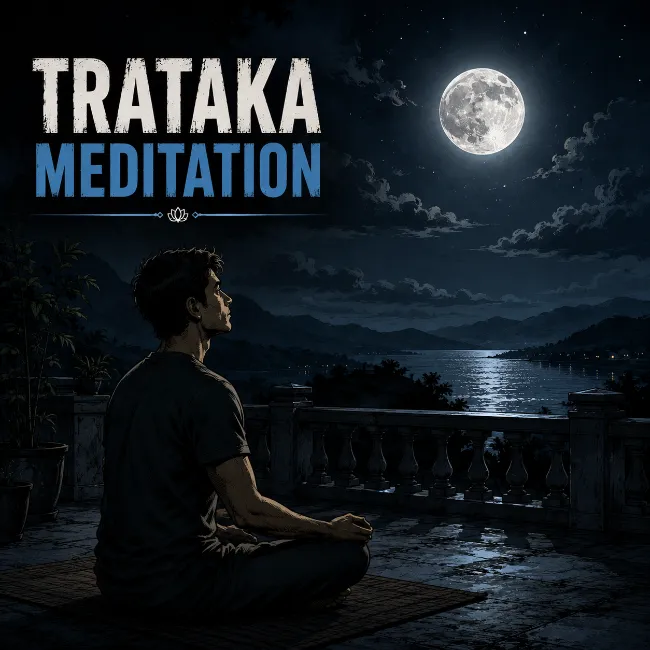
Choose a Quiet and Undisturbed Location
One of the first requirements for Trataka is a peaceful environment. Select a quiet place where you are unlikely to be interrupted during your practice session.
External distractions can break your concentration and reduce the effectiveness of the exercise.
Practicing at the same time and in the same location each day can also help create a consistent meditation routine.
Start with the Right Trataka Technique
There are several forms of Trataka, ranging from beginner-friendly methods to more advanced practices.
Many newcomers are eager to try Candle Trataka or Mirror Trataka immediately, but these techniques can sometimes feel challenging for beginners.
For this reason, many experienced practitioners recommend starting with Bindu Trataka, which involves focusing on a simple black dot. Once your concentration improves, you can gradually explore other forms of Trataka.
Sit in a Comfortable Posture
Comfort plays an important role in maintaining concentration. Choose a stable sitting posture that allows you to remain relaxed without excessive movement.
Whether you sit cross-legged on the floor or on a chair, the goal is to keep the spine comfortably upright while minimizing physical discomfort.
Gaze Steadily Without Straining
The essence of Trataka lies in maintaining a steady gaze on a chosen object. While the traditional practice encourages gazing without blinking for as long as comfortably possible, it is important not to strain the eyes.
The objective is to develop concentration, not to force the eyes to remain open. If blinking becomes necessary, allow it naturally and continue the practice.
Close Your Eyes and Visualize
After gazing at the object for a period of time, your eyes may begin to feel tired or watery.
At this stage, gently close your eyes and attempt to visualize the same object in your mind.
This transition from external observation to internal visualization helps deepen concentration and develops the practice of Antar Trataka (Internal Trataka).
Focus on One Thought if the Mind Wanders
A common challenge during Trataka is mental distraction. If your mind repeatedly drifts away from the object of focus, try returning your attention to a single thought, affirmation, mantra, or intention.
This can help stabilize the mind and make concentration easier.
End the Practice Gently
Avoid rushing to finish your session. When the practice is complete, take a few moments to relax before opening your eyes fully.
Many practitioners find it helpful to rub their palms together until they become warm and then gently place them over their closed eyes. This traditional yogic technique can provide comfort and relaxation after the practice.
Read : 5 secret Signs of success in Tratak Sadhana you need to know
Common Beginner Mistakes to Avoid
Many beginners become overly concerned with keeping their eyes open for as long as possible.
As a result, they may strain their eyes while neglecting the actual purpose of the practice—developing concentration and mental stillness.
Remember that Trataka is not a test of endurance. A calm and focused mind is far more important than forcing yourself to stare for extended periods.
By following these simple guidelines and practicing consistently, you can avoid many common beginner mistakes and create a strong foundation for long-term progress in Trataka gazing Meditation.
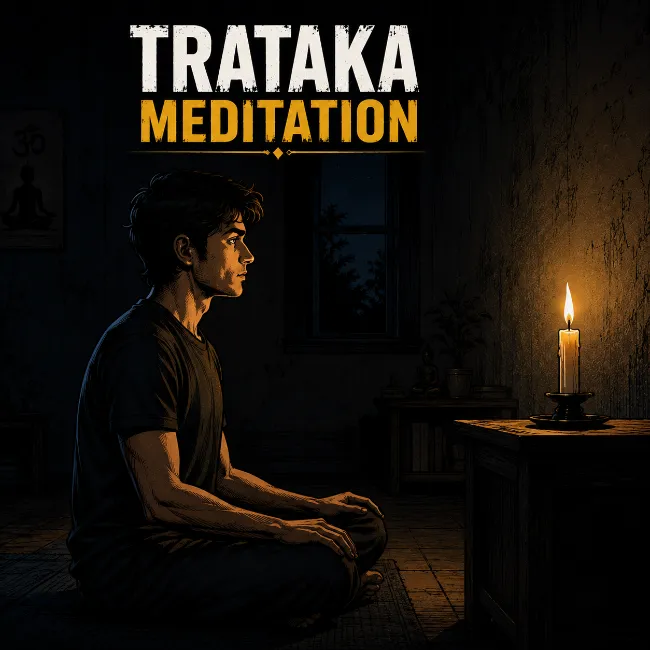
What Is the Best Time to Practice Trataka gazing Meditation?
One of the most common questions beginners ask is: What is the best time to practice Trataka gazing Meditation? The truth is that there is no single answer that works for everyone.
The ideal time depends on when your mind is naturally calm, alert, and capable of maintaining focus.
Some people feel most productive and mentally clear in the early morning, while others find it easier to concentrate during the evening hours.
Rather than following a rigid rule, it is better to choose a time that aligns with your natural energy levels and daily routine.
Practicing Trataka in the Morning
Morning is traditionally considered one of the best times for meditation and concentration practices.
During the early hours of the day, the environment is usually quieter, and the mind is less occupied with daily responsibilities and distractions.
Many practitioners find that morning Trataka helps them start the day with greater mental clarity, focus, and emotional balance.
If you naturally feel alert after waking up, morning practice may be the ideal choice for you.
Practicing Trataka in the Evening
The period around sunset is another popular time for Trataka practice. By this time, the activities of the day are slowing down, making it easier to shift attention inward.
Evening practice can help release mental tension accumulated throughout the day and prepare the mind for relaxation.
It is particularly beneficial for people who find it difficult to wake up early or who feel more focused during the later hours of the day.
Practicing Trataka before Sleep
Some practitioners prefer to practice Trataka shortly before going to bed. At this time, the mind naturally begins transitioning toward a more relaxed state.
A brief session can help calm mental activity, reduce stress, and encourage a peaceful night’s sleep.
Many meditation traditions also emphasize the importance of maintaining positive thoughts and intentions before sleep, as the mind tends to be more receptive during this period.
For this reason, some practitioners choose to combine Trataka with positive visualization, affirmations, or self-reflection before bedtime.
How to Choose the Right Time for You
If you are unsure when to practice Trataka, ask yourself the following questions:
- When is my mind naturally the most focused?
- When do I experience the fewest distractions?
- When do I feel mentally and physically comfortable?
- Which time of day allows me to practice consistently?
The best time for Trataka is ultimately the time that allows you to practice regularly with full attention and minimal distractions. Consistency is far more important than the specific hour you choose.
As a beginner, focus on building the habit of daily practice rather than searching for the perfect time. Once Trataka becomes part of your routine, maintaining concentration and discipline will become much easier.
Read : These 5 Psychic and Spiritual Benefit of Guru Murti Tratak Meditation Sadhna will Amaze You
How Long Should You Practice Trataka Meditation?
One of the most common questions beginners ask is: How long should I practice Trataka gazing Meditation? Many people assume that longer sessions automatically produce better results. However, this misconception often leads to eye strain, discomfort, and frustration.
The goal of Trataka is not to keep your eyes open for the longest possible time. Rather, it is to maintain a steady gaze on a chosen object while keeping the mind calm and focused. Quality of concentration is far more important than the duration of the practice.
A common mistake among beginners is forcing themselves to stare for extended periods while their minds remain distracted. Trataka becomes effective when the gaze is steady, relaxed, and supported by mental focus—not when the eyes are strained.
Trataka Duration for Beginners
If you are new to Trataka and starting with a simple technique such as Bindu Trataka gazing meditation (Dot Gazing), a session of 5 to 10 minutes is usually sufficient.
During this stage, your primary objective should be to:
- Develop a steady gaze without excessive strain.
- Reduce mental distractions.
- Build a consistent daily practice.
- Become comfortable with the technique.
Even if you can maintain your gaze for only a few seconds before blinking, that is perfectly normal. Focus on practicing naturally rather than trying to achieve long staring periods immediately.
Intermediate Stage of Practice
After several weeks of regular practice, many practitioners find that maintaining concentration becomes easier. At this stage, sessions of 10 to 20 minutes may be more appropriate.
During the intermediate phase, practitioners often report:
- Improved concentration and attention span.
- Greater mental calmness.
- Increased emotional stability.
- Enhanced self-awareness.
- Better consistency in meditation practice.
The key is to increase duration gradually while remaining comfortable and relaxed throughout the session.
Advanced Trataka Practice
As your experience grows, you may naturally become capable of practicing for longer periods without discomfort. Advanced practitioners often focus less on duration and more on the depth of concentration achieved during the practice.
Traditional yogic teachings suggest that deeper states of focus can lead to profound experiences of inner stillness, self-awareness, and mental clarity. Some practitioners also describe heightened intuition, stronger self-discipline, and a greater sense of connection with their inner world. However, individual experiences vary significantly from person to person.
Rather than measuring success by how long you can keep your eyes open, focus on cultivating a calm, steady, and attentive mind. Consistent daily practice, even for a short duration, is usually far more beneficial than occasional long sessions.
A Simple Rule to Remember
When practicing Trataka, prioritize comfort, concentration, and consistency over duration. If your eyes become strained, tired, or excessively watery, it is better to close them, relax, and continue with internal visualization rather than forcing yourself to continue staring.
In Trataka gazing Meditation, progress comes not from how long you practice, but from how deeply you engage with the practice.
My Personal Experience with Trataka Meditation
My journey with Trataka gazing Meditation began when I was 16 years old and studying in the 10th grade.
At that time, I was searching for a way to improve my concentration and stay focused on my studies. Like many teenagers, I was dealing with distractions, emotional ups and downs, and the challenges that come with growing up.
Looking back, I can confidently say that Trataka played an important role in helping me develop greater focus, self-discipline, and mental calmness.
I was first introduced to Trataka by my grandfather, who had a deep interest in spiritual practices, traditional healing methods, and mantra sadhana. Living with him gave me the opportunity to learn about meditation and concentration techniques from an early age.
I started with Bindu Trataka gazing meditation, the practice of gazing steadily at a single point. In the beginning, I faced many of the same challenges that beginners experience today. Finding a quiet place was difficult. My eyes would water after only a short time, and my mind constantly wandered from one thought to another. Every time I tried to focus, a new stream of thoughts would appear.
Seeing my struggle, my grandfather shared a simple piece of advice that changed my practice. He encouraged me to combine Trataka with relaxation techniques such as Shavasana and to repeatedly focus on a single calming thought. According to him, a relaxed body creates the ideal environment for a focused mind.
I began repeating a simple affirmation while practicing: “My mind is becoming calm and free from unnecessary thoughts.” One day, after only a few minutes of practice, I experienced something I had never felt before. My mind became completely still. The constant mental chatter disappeared, and I felt an unusual sense of lightness, peace, and awareness. It was one of the most memorable moments of my meditation journey.
As I continued practicing over the following months and years, I noticed several positive changes. My concentration improved significantly, and I found it easier to remain focused while studying. Sometimes, after reading a book, I would find myself mentally reviewing entire sections of what I had learned while walking or performing routine tasks. My ability to retain information and maintain attention became noticeably stronger.
During this period, I also explored different forms of Trataka, including Bindu Trataka, Candle Trataka, and Mirror Trataka. Each practice offered a unique experience and helped me understand different aspects of concentration, self-awareness, and mental discipline. While traditional teachings often associate specific benefits with different forms of Trataka, I believe the greatest benefit was the development of focus, confidence, and self-control.
However, my journey was not without mistakes.
As a teenager, I sometimes became more interested in the confidence and attention I was gaining than in the true purpose of the practice. The increased self-confidence I developed through meditation affected the way I interacted with others, and I occasionally used that confidence in immature ways. Looking back, I realize that I was focusing on external validation rather than personal growth.
One particular experience left a lasting impression on me. I became so focused on gaining attention and admiration that I failed to consider how my actions might affect someone else’s emotions. The guilt I felt afterward forced me to reflect deeply on my behavior and the responsibility that comes with personal development.
Over time, I came to understand an important lesson: meditation and spiritual practices should be used for self-improvement, not for gaining influence over others. The true value of Trataka lies in understanding yourself, strengthening your mind, and cultivating inner balance.
Even after more than eight years of practice, that lesson remains one of the most valuable things Trataka has taught me. If there is one message I would like readers to take away from my experience, it is this:
Use Trataka to improve yourself, not to control or impress others. Focus on personal growth, discipline, and self-awareness. When practiced with the right intention, Trataka can become a powerful tool for transformation and success.
Common Trataka gazing Meditation Mistakes and How to Avoid Them
Like any meditation practice, Trataka can be highly rewarding when performed correctly. However, many beginners make a few common mistakes that can lead to discomfort, frustration, or a lack of progress. Understanding these challenges in advance can help you practice more safely and effectively.
1. Excessive Eye Watering
One of the most common experiences during the early stages of Trataka is watering of the eyes. This is often a natural response when you focus on an object without blinking for an extended period.
The problem arises when practitioners force themselves to keep their eyes open far beyond their comfort level. Excessive strain can cause persistent watering and make the practice unpleasant.
How to Avoid It
- Do not force your eyes to remain open.
- Focus on maintaining relaxed concentration rather than endurance.
- Blink naturally when necessary and gradually increase your practice time over weeks or months.
- Remember that Trataka is a concentration exercise, not a test of how long you can stare without blinking.
2. Eye Strain or Discomfort
Some practitioners may experience temporary eye fatigue, dryness, or mild discomfort after practice. This usually occurs when sessions are too long or when excessive effort is applied.
How to Avoid It
- Keep your practice comfortable and relaxed.
- Take breaks when needed.
- After completing your session, gently rub your palms together and place them over your closed eyes for a few moments. This traditional yogic relaxation technique, often called palming, may help the eyes feel more comfortable.
- If discomfort persists, reduce the duration of your practice or consult an eye-care professional.
3. Headaches During Practice
Occasional headaches can occur when practitioners strain their eyes, hold tension in the face, or attempt advanced Trataka techniques before developing basic concentration skills.
How to Avoid It
- Practice in a relaxed manner without forcing concentration.
- Maintain a comfortable posture and steady breathing.
- Start with beginner-friendly techniques such as Bindu Trataka before progressing to more advanced variations.
- Stop the session if you experience significant discomfort.
4. Expecting Immediate Results
Many beginners start Trataka expecting dramatic experiences within a few days. When those expectations are not met, they become discouraged and abandon the practice.
How to Avoid It
- Approach Trataka as a long-term discipline.
- Focus on consistency rather than extraordinary experiences.
- Pay attention to gradual improvements in concentration, mental clarity, and self-awareness.
- Trust the process and allow progress to develop naturally.
5. Becoming Frustrated by Wandering Thoughts
A wandering mind is one of the most common challenges in any meditation practice. Many beginners assume they are failing whenever thoughts arise.
How to Avoid It
- Accept that thoughts will naturally appear.
- Gently return your attention to the object of focus whenever you become distracted.
- Avoid judging yourself for losing concentration.
- Treat each return of attention as part of the training process.
6. Feeling Emotionally Sensitive or Introspective
As concentration deepens, some practitioners report becoming more aware of their emotions, habits, and thought patterns. This increased self-awareness can sometimes feel unfamiliar or intense, particularly for beginners.
How to Manage It
- View these experiences as opportunities for self-understanding.
- Maintain a balanced daily routine and healthy social connections.
- Spend time in nature, engage in physical activity, and practice grounding activities when needed.
- If emotional difficulties become overwhelming, consider speaking with a qualified mental health professional.
Most difficulties encountered during Trataka practice are not caused by the technique itself but by excessive effort, unrealistic expectations, or inconsistency. The key to success is simple: practice regularly, remain patient, and prioritize comfort over intensity.
A calm, relaxed, and focused approach will produce far better results than forcing yourself to achieve progress too quickly.
Read : Why sometime Meditation Makes You Angry and 5 Powerful Way to Deal with Negative Eemotion
Common Myths about Trataka gazing Meditation
As Trataka gazing Meditation has gained popularity, many misconceptions and exaggerated claims have also emerged.
While Trataka is a powerful concentration practice with deep roots in yogic traditions, it is important to separate realistic expectations from myths. Understanding what Trataka can and cannot do will help you approach the practice with the right mindset.
Myth #1: Trataka Can Instantly Awaken the Sixth Sense
One of the most common claims surrounding Trataka gazing meditation is that it can quickly awaken the “sixth sense” or psychic abilities.
In reality, the primary purpose of Trataka is to improve concentration, mental clarity, and self-awareness. As practitioners become more attentive to their thoughts, emotions, and surroundings, they may notice subtle insights or heightened intuition. Some individuals interpret these experiences as signs of an awakened sixth sense.
From a yogic perspective, advanced meditation practices are believed to help expand awareness over time. However, there is no evidence that Trataka can instantly awaken extraordinary abilities within a few days or weeks of practice.
Myth #2: Trataka Grants Supernatural Powers
Another popular myth is that Trataka can provide supernatural powers or allow practitioners to control people and events around them.
The true purpose of Trataka is far more practical and meaningful. Regular practice helps develop concentration, self-discipline, mental stability, and inner awareness. Many practitioners also report increased confidence and a stronger sense of focus.
While traditional spiritual texts sometimes describe extraordinary experiences associated with advanced meditation practices, these accounts should not be viewed as guaranteed outcomes. The real value of Trataka lies in personal growth and self-mastery rather than the pursuit of supernatural abilities.
Myth #3: You Can Master Trataka in a Few Days
Many beginners start practicing Trataka hoping for rapid results. When dramatic changes fail to appear immediately, they often become discouraged.
Like any skill, Trataka requires patience, consistency, and gradual progress. Concentration develops over time through regular practice, not through shortcuts or extreme effort.
Most experienced practitioners agree that steady daily practice produces better results than attempting long sessions in the hope of accelerating progress. The journey is gradual, and each stage builds upon the foundation created by the previous one.
Myth #4: Longer Practice Always Produces Better Results
Some people believe that staring at an object for longer periods automatically leads to greater benefits. This misunderstanding often causes unnecessary eye strain and frustration.
In Trataka, quality is more important than quantity. A short session performed with genuine concentration is usually more beneficial than a long session filled with distraction and discomfort.
The Reality of Trataka Practice
Trataka gazing meditation practice is not a shortcut to extraordinary abilities, nor is it a magical technique that produces instant transformation. It is a disciplined practice that gradually trains the mind to become calmer, more focused, and more aware.
The most significant benefits of Trataka come from patience, consistency, and self-observation. When practiced correctly, it can become a valuable tool for improving concentration, strengthening mental discipline, and deepening your meditation journey.
Rather than chasing extraordinary experiences, focus on steady progress. Over time, the improvements in focus, clarity, and self-awareness will speak for themselves.
Who Should Avoid Trataka gazing meditation?
Serious Eye Conditions
Although Trataka gazing Meditation is generally considered safe when practiced correctly, individuals with serious eye conditions should avoid it or seek medical advice before beginning.
Conditions such as glaucoma, retinal disorders, severe dry eye syndrome, corneal problems, or chronic eye inflammation can make prolonged gazing uncomfortable and may worsen existing symptoms.
Since Trataka gazing meditation involves focusing on a fixed object for a period of time, it can place additional strain on sensitive eyes.
If you already experience pain, blurred vision, excessive dryness, or other eye-related issues, it is important to prioritize your eye health.
Consulting an eye specialist before starting Trataka can help determine whether the practice is appropriate for your specific condition and ensure that you meditate safely.
Recent Eye Surgery
People who have recently undergone eye surgery should avoid Trataka until they have fully recovered and received approval from their healthcare provider.
Procedures such as LASIK, cataract surgery, retinal surgery, or corneal treatments require a healing period during which the eyes remain sensitive.
Practicing Trataka too soon after surgery may cause discomfort, dryness, irritation, or unnecessary strain on the healing tissues.
Recovery times vary depending on the type of procedure and the individual’s health, so it is important not to rush back into meditation practices involving focused gazing.
Once your doctor confirms that your eyes have healed properly, you can gradually resume Trataka, starting with short sessions and paying close attention to any signs of discomfort.
Severe Migraines
Individuals who suffer from severe or frequent migraines should approach Trataka with caution. In some cases, prolonged visual focus, bright lights, or intense concentration can act as migraine triggers.
Practices such as Candle Trataka may be particularly uncomfortable for people who are sensitive to light or already prone to headaches.
While some practitioners report that meditation helps them manage stress-related migraines, Trataka may not be suitable during active migraine episodes or periods of heightened sensitivity.
If you have a history of chronic migraines, it is advisable to begin with gentle meditation techniques instead of fixed-gaze practices. Always pay attention to your body’s response and discontinue the practice if it causes discomfort or worsens symptoms.
Medical Precautions
Before starting Trataka gazing Meditation, it is important to consider any existing medical conditions that could affect your ability to practice comfortably and safely.
Individuals with neurological disorders, severe anxiety, eye diseases, chronic headaches, or other health concerns should consult a qualified healthcare professional if they have doubts about whether Trataka is appropriate for them.
Beginners should also avoid forcing the practice, as excessive effort can lead to eye strain, fatigue, or discomfort.
Start with short sessions, maintain a relaxed posture, and allow your concentration to develop naturally over time.
Remember that Trataka gazing meditation is a gradual practice designed to improve focus and awareness, and it should never come at the expense of your physical well-being.
Read : How to caste Vashikaran by Tratak Meditation easiest Way to perform Vashikaran
FAQ
1. What Is Trataka Meditation?
Trataka gazing Meditation is an ancient yogic concentration technique that involves steadily gazing at a fixed object, such as a black dot, candle flame, sacred symbol, or another point of focus. The purpose of this practice is to improve concentration, mental clarity, and self-awareness. By training the mind to focus on a single point, Trataka helps reduce distractions and develop mental discipline. It is often used as a preparatory practice for deeper meditation because it strengthens the ability to maintain attention for extended periods.
2. Is Trataka Safe?
Yes, Trataka is generally safe when practiced correctly and without straining the eyes. Beginners should avoid forcing themselves to keep their eyes open for long periods. Short, comfortable sessions are more beneficial than lengthy sessions that cause discomfort. Individuals with serious eye conditions, recent eye surgery, or chronic migraines should consult a healthcare professional before starting Trataka. Practicing with patience and moderation helps ensure a safe and positive experience.
3. Can I Practice Trataka Every Day?
Yes, daily practice is often recommended for those who want to improve their concentration and meditation skills. Consistency is more important than duration. Even five to ten minutes of daily practice can help build focus and mental discipline over time. Regular practice also makes it easier to develop a sustainable meditation habit. However, if you experience eye strain or discomfort, reduce the duration and allow your eyes to rest before continuing.
4. How Long Does It Take to See Results?
The time required to notice results varies from person to person. Some people experience improved focus and mental calmness within a few weeks of regular practice, while others may require more time. Factors such as consistency, concentration level, and overall lifestyle influence the results. Rather than focusing on immediate outcomes, it is best to view Trataka as a long-term practice that gradually develops concentration, self-awareness, and mental stability.
5. Can Trataka Improve Concentration?
Yes, improving concentration is one of the primary goals of Trataka gazing Meditation. By repeatedly focusing on a single object, the mind learns to remain attentive and resist distractions. Over time, this can enhance focus during work, study, reading, and daily activities. Many practitioners report better attention span, mental clarity, and the ability to stay focused for longer periods after incorporating Trataka into their routine.
6. Can Beginners Practice Trataka?
Absolutely. Trataka is suitable for beginners because it is simple to learn and requires minimal preparation. Most beginners start with Bindu Trataka, which involves focusing on a small black dot. Short sessions of five to ten minutes are usually sufficient during the early stages. As concentration improves, practitioners can gradually increase the duration or explore other forms of Trataka. The key is to practice consistently without straining the eyes.
7. What Is the Best Object for Trataka?
For beginners, a black dot is often considered the best object because it provides a simple and stable point of focus. Other commonly used objects include candle flames, yantras, sacred symbols, and the moon. The best object is ultimately the one that allows you to maintain comfortable and steady concentration. Regardless of the object chosen, the goal remains the same: developing focus, awareness, and mental discipline.
8. Is Candle Trataka Better Than Bindu Trataka?
Neither technique is inherently better than the other. Bindu Trataka is generally recommended for beginners because it is simple and easy to practice. Candle Trataka uses a flame as the focus point, which many practitioners find engaging and motivating. However, candle gazing may cause eye fatigue if practiced incorrectly. For most beginners, Bindu Trataka is an excellent starting point, while Candle Trataka can be explored later as concentration and experience develop.