
A trance state is a unique state of consciousness in which a person’s spirit becomes highly aware of the spiritual realm while the physical body remains in a partially conscious condition.
The word trance is often associated with the Greek term ekstasis, meaning “standing outside” or “displacement.”
This describes a state in which a person feels separated from ordinary awareness and becomes deeply focused on a spiritual experience.
Many people mistakenly confuse a trance with what some describe as astral projection.
However, these experiences are not the same. Unlike hypnosis, mind-altering practices, or certain rituals that claim to produce altered states of consciousness, a trance cannot be created through human effort or technique.
A true trance cannot be forced or self-induced. Instead, it occurs only through the work of the Holy Spirit.
So why trance state is different from a normal state of mind or sleep state? Here is the answer.
During a trance, the spirit remains within the physical body. The most noticeable aspect of the experience is an increased awareness of the spiritual realm, while the body enters a hypnagogic state.
Hypnagogic is the transitional phase between being fully awake and falling asleep.
During this state, people may experience vivid mental imagery, hallucination-like sensations, or lucid dreams. Because of this, many individuals who report experiencing prophetic trances often find it difficult to tell whether they were awake or asleep.
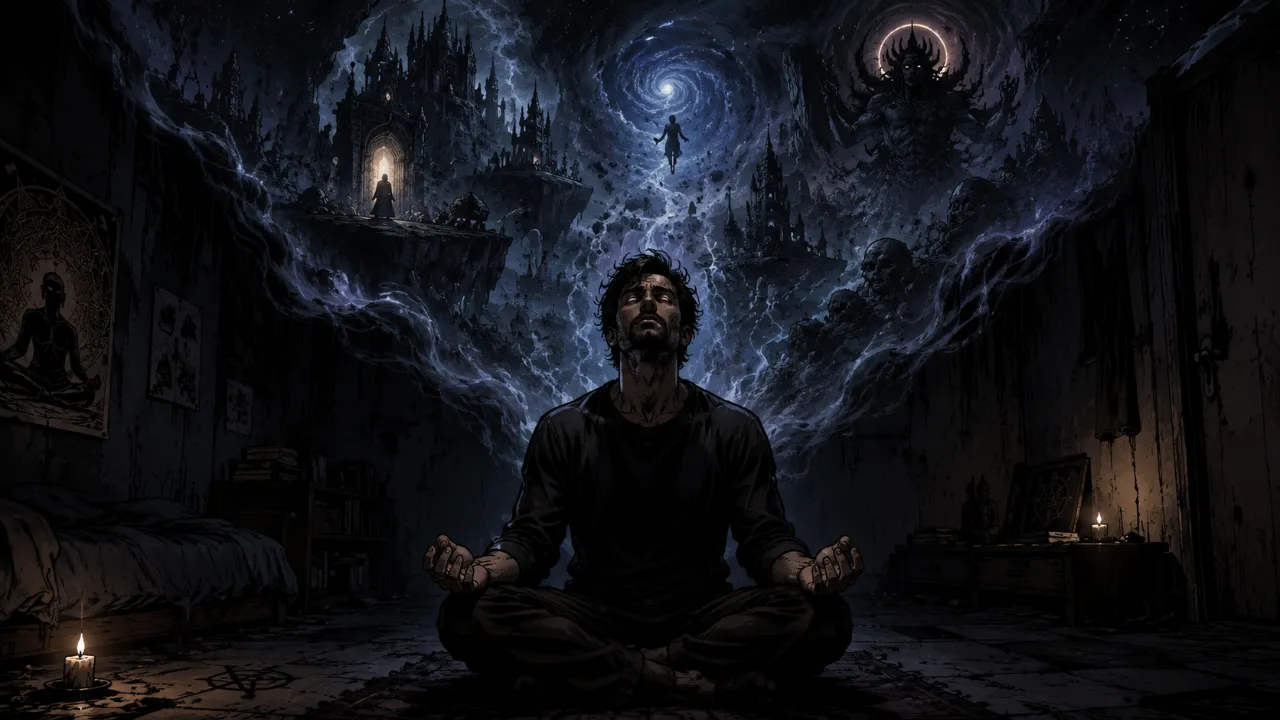
One of the most common descriptions shared after such an experience is:
“I’m not sure whether I was asleep or awake.”
For some people trance state occur as a sudden experience and for a short time period they can’t are unable to separate a realm or reality. They experience something unexpected and adventures.
If you are one of them, this is right time to explore the How to enter a trance state safely.
- Why Trance state Matters in Spirit Communication
- The Difference Between Relax State Of Mind and Trance State of Consciousness
- How to Prepare Before You Enter a Trance State
- Technique 1: Sigil Gazing Trance
- Technique 2: Breath Descent Trance
- Technique 3: Flame Trance
- Technique 4: Rhythmic Chant Trance
- Technique 5: Mirror or Water Scrying Trance
- Technique 6: Body Stillness Trance
- Technique 7: Ritual Movement Trance
- Technique 8: Automatic Writing Trance
- Technique 9: Drum, Bell, or Sound Trance
- How to Deepen a Trance State
- Signs You Have Entered a Trance State
- Coming Out of a Trance State
- Interpreting Signs after Trance Work
- How can I enter a trance state?
- What does it mean to be in a trance state?
- How can I go into a trance?
- What does it mean to enter a trance?
- What are the signs that I have entered a trance state?
Why Trance state Matters in Spirit Communication
Developing sensitivity is an important part of spiritual practice. At first, the signs may be very subtle, becoming clearer and stronger with experience.
Beginners often perform a ritual and assume that nothing happened because they do not witness any visible apparition or physical manifestation.
More experienced practitioners, however, pay close attention to the smaller changes and subtle impressions that may occur during the experience.
This awareness becomes especially valuable during practices such as evocation, scrying, automatic writing, dream incubation, pendulum work, and other rituals that focus on receiving guidance or insight rather than simply projecting intention.
Entering a trance state also helps create a deeper ritual atmosphere.
When a practitioner simply reads words from a page while remaining in an ordinary state of mind, the ritual may feel mechanical or lacking in depth.
However, once a trance state has been established, those same words often carry greater significance.
Ritual tools may begin to feel less like ordinary objects and more like meaningful parts of the overall spiritual experience.
The Difference Between Relax State Of Mind and Trance State of Consciousness
Relaxation and a trance state are not the same experience.
Relaxation simply means that the body and mind are calm. A trance state, on the other hand, involves a noticeable shift in awareness.
Although relaxation often accompanies trance, a trance can also feel intense, deeply focused, emotionally powerful, visionary, or filled with heightened mental clarity.
As you enter a trance state during a ritual, you may begin to notice several common signs:
- Your thoughts become quieter and less distracting.
- Your attention naturally focuses on the sigil, candle flame, mirror, chant, or another ritual object.
- Your body may feel unusually heavy, light, larger than normal, or slightly detached from its surroundings.
- Your sense of time may slow down or become less significant.
- Images, words, symbols, or intuitive impressions arise more naturally.
- The ritual space begins to feel separate from your everyday environment, creating a stronger sense of spiritual presence.
For many spiritual practices, a light trance state is all that is needed. Deeper levels of trance may be more suitable for practices such as scrying, channeling, spirit communication, dream work, or receiving symbolic messages.
Rather than trying to reach the deepest possible trance every time, the goal is to enter a trance state that best supports the purpose of the ritual or spiritual practice.
How to Prepare Before You Enter a Trance State
Proper preparation is essential before you enter a trance state for any ritual or spiritual practice.
Once you have reached a deep level of focus, stopping to search for a forgotten item—such as incense, a petition, or the correct candle—can interrupt the experience and make it difficult to regain the same level of concentration.
Before beginning the ritual, make sure everything is ready:
- Arrange the altar with all the necessary ritual tools.
- Draw or print the sigil before starting.
- Prepare the ritual circle and triangle if your practice requires them.
- Place candles and incense in safe locations where they are easy to reach.
- Write your petition in advance.
- Keep a notebook nearby to record any impressions, symbols, or messages you receive.
- Silence your phone and disable unnecessary notifications.
- Choose a quiet, private space where you are unlikely to be disturbed throughout the ritual.
Your physical posture also plays an important role when you enter a trance state.
The body should be comfortable enough to remain relaxed without becoming so comfortable that you fall asleep. Although lying down may seem relaxing, it often leads to drowsiness. For most ceremonial rituals, sitting or standing provides better balance between relaxation and alertness.
A straight-backed chair, standing before the altar, or sitting cross-legged in front of the sigil are all suitable positions.
Finally, pay attention to your breathing and surroundings.
Maintain slow, steady breaths to help settle the mind, and keep the lighting dim enough to create a focused atmosphere while still allowing you to safely read, move around the space, and handle your ritual tools.
Read : How to cast most Powerful Witchcraft Love Spells to make someone fall in love 3 Unique Spells
Technique 1: Sigil Gazing Trance
Sigil gazing is one of the most widely practiced methods used to enter a trance state during spirit work. The purpose of this technique is to allow the sigil to become a focal point through which the mind gradually shifts into a deeper level of awareness.
Position the sigil at eye level or slightly below. Illuminate it with candlelight or another gentle light source that allows you to see the symbol clearly without causing eye strain.
Sit or stand in a comfortable position. Relax your shoulders, face, and jaw. Focus your gaze on the sigil without staring forcefully. Your eyes should remain relaxed while maintaining steady attention.
After a minute or two, you may notice the sigil appearing to blur, brighten, darken, pulse, shift, or stand out from the page.
These visual changes are commonly reported during prolonged concentration. Instead of trying to force the experience, simply observe it and allow it to develop naturally.
As your focus deepens, begin repeating the spirit’s name or enn slowly and rhythmically.
Keep your attention on the sigil while allowing the spoken name and the image to become mentally connected. Over time, the symbol may begin to feel less like ink on paper and more like a focal point for spiritual awareness.
When the sigil begins to feel “open,” you may notice subtle changes such as a shift in the atmosphere, a sense of presence, an emotional response, or a sudden intuitive impression.
Many practitioners consider this an appropriate time to begin the formal conjuration or present their request.

Technique 2: Breath Descent Trance
The Breath Descent Trance is one of the simplest and most effective ways to enter a trance state before beginning a ritual. This method uses controlled breathing to gradually shift your awareness inward, helping you develop a calm and focused state before invoking a spirit or starting spiritual work.
Begin by sitting or standing comfortably in front of your altar. Keep your spine straight and allow your eyes to rest gently on the sigil, candle flame, or another central ritual object.
Follow this breathing pattern:
- Inhale slowly through your nose for a count of four.
- Hold your breath gently for a count of two.
- Exhale slowly through your mouth for a count of six.
- Repeat this breathing cycle several times.
With every exhale, imagine ordinary thoughts leaving your body like grey smoke. Rather than resisting distractions, simply acknowledge them and allow them to drift away with each breath.
After a few minutes, begin counting backward from thirteen to one. As you exhale with each number, visualize yourself descending deeper into your inner ritual chamber.
- Thirteen: The outside world begins to fade.
- Twelve: Your body becomes calm and still.
- Eleven: Your breathing settles into a steady rhythm.
- Ten: The altar becomes the center of your attention.
- Nine: The sigil appears clearer and more defined.
- Eight: The room grows quieter.
- Seven: Everyday thoughts gradually fade into the background.
- Six: The ritual space feels separate from ordinary reality.
- Five: Your body feels heavier or more distant.
- Four: Your inner awareness begins to expand.
- Three: The spirit’s name becomes clear in your mind.
- Two: The ritual chamber feels ready.
- One: You have entered the trance state.
Once this stage is complete, continue with the next part of your ritual, whether it involves sigil gazing, chanting, conjuration, or scrying.
This technique is particularly useful before formal evocation because it quiets the mind without making the practitioner overly passive. It encourages deep concentration while maintaining enough awareness to continue the ritual with intention.
Technique 3: Flame Trance
Flame Trance is a powerful technique for those who want to enter a trance state using focused candle meditation. It is commonly associated with spiritual practices involving fire, revelation, determination, purification, transformation, and illumination.
Many practitioners also use this method to create a stronger sense of focus and presence before beginning a ritual.
Place a candle or ritual lamp in front of you, ensuring that the flame is stable, secure, and positioned at a safe distance from your face. Dim the room so the flame becomes the primary source of light and naturally draws your attention.
Rest your eyes gently on the flame with a relaxed, steady gaze.
Avoid staring too intensely. Instead, observe the natural movement of the flame without trying to assign meaning to every flicker or change.
As you watch the flame, breathe slowly and evenly.
- With each inhale, imagine drawing a small amount of the flame’s light into yourself.
- With each exhale, visualize the flame burning away distracting thoughts and mental noise.
After several minutes, begin coordinating your breathing with the spirit’s name.
- Inhale silently.
- As you exhale, softly speak or whisper the spirit’s name.
- Continue this rhythm until the flame appears unusually vivid or you sense a noticeable shift in your awareness or the surrounding atmosphere.
In traditions that associate certain spirits—such as Aim, Amy, or other fire-related entities—with the element of fire, the flame may be viewed as an initial point of spiritual focus or manifestation. At this stage, the formal conjuration can be directed through the flame toward the ritual triangle or the sigil.
A simple invocation may be used:
“Through this flame, let the hidden presence become visible.”
Flame Trance can also be helpful when seeking guidance or insight during a ritual. After asking your question, continue observing the flame with calm attention.
Some practitioners interpret changes such as a sudden flare, dimming, unusual movement, or a strong intuitive impression as part of their spiritual reading.
However, avoid treating every movement of the flame as a definite message or mechanical sign. The flame serves as a tool to deepen concentration and sharpen perception rather than as a device that provides simple yes-or-no answers.
Technique 4: Rhythmic Chant Trance
Rhythmic Chant Trance is one of the most effective techniques to enter a trance state because it gives the mind a single point of focus. Instead of becoming distracted by random thoughts, your attention gradually settles on a repeated name, enn, sacred phrase, or ritual invocation.
Before beginning the ritual, choose a short chant that you can repeat comfortably. This may be the spirit’s name, a traditional enn, or a phrase that reflects the spirit’s qualities or area of influence.
Examples include:
- “Aim, bearer of the firebrand.”
- “Raum, crow of hidden roads.”
- “Glasya-Labolas, reveal the line.”
You may also use a traditional enn if it is part of your spiritual practice.
Begin chanting in a calm, steady voice. Rather than focusing on dramatic pronunciation, allow the rhythm and repetition to become the center of your attention.
As the chant continues, you may notice that it begins to feel almost effortless, as though it is repeating on its own.
Your breathing, voice, and body gradually settle into the same rhythm. Many practitioners consider this the point at which a trance state begins to develop.
The volume of the chant can be adjusted to match the purpose of the ritual. A louder chant may be preferred for a more forceful invocation, while a soft whisper often supports a quieter, more inward-focused practice.
Some rituals benefit from a slow, continuous drone, whereas others feel more effective with a firm and deliberate rhythm.
For deeper levels of trance, chanting can be combined with gentle movement. Walk slowly around the ritual circle while maintaining the chant.
When you reach the triangle or your chosen focal point, pause and continue chanting until the atmosphere feels noticeably different. At that stage, proceed with the formal conjuration.
Rhythmic Chant Trance is particularly useful before evocation because it allows concentration and ritual focus to build gradually. Instead of rushing directly into the conjuration, the repeated chant helps create a stronger sense of preparation and sustained spiritual attention throughout the ceremony.
Technique 5: Mirror or Water Scrying Trance
Mirror or Water Scrying Trance is a traditional method used to enter a trance state when a ritual focuses on divination, hidden knowledge, symbolic messages, dreams, communication with spirits, or exploring possible future outcomes.
A black mirror, a dark bowl of water, or even an ordinary bowl placed in dim lighting can serve as the focal point. The surface should be dark enough to encourage concentration without making you feel drowsy.
Sit comfortably in front of the mirror or bowl and allow your eyes to rest gently on its surface.
Avoid staring with excessive effort or trying to force an image to appear. Instead, maintain a relaxed gaze, almost as if you are looking beyond the surface rather than directly at it.
Breathe slowly and allow the room to become quiet and free from distractions.
After several minutes of focused attention, the surface may appear deeper, slightly luminous, cloudy, or gently moving.
Some practitioners report seeing symbolic images, while others experience words, emotions, memories, or intuitive impressions instead. Every experience can be different, so allow the process to unfold naturally without forcing a result.
Before inviting a spirit to communicate through the mirror, establish the ritual structure.
Position the sigil close to the mirror, then complete the spirit invocation within the ritual circle, triangle, or other designated ritual space according to your tradition. Once this foundation has been established, the mirror becomes the focal point for receiving impressions.
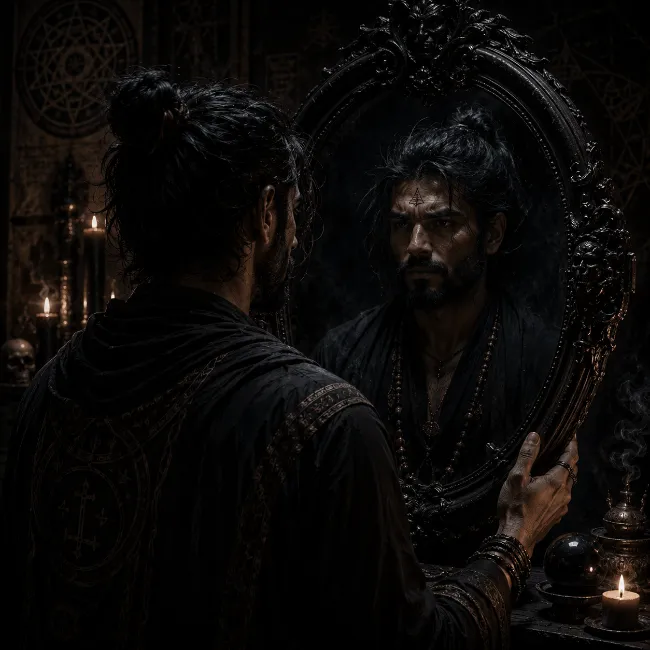
A simple sequence for this practice is:
- Enter a trance state through controlled breathing.
- Focus your attention on the sigil.
- Perform the spirit invocation.
- Confirm the ritual presence according to your practice.
- Turn your attention to the mirror or bowl.
- Ask your question clearly.
- Record any images, symbols, thoughts, or impressions that arise.
During Mirror Trance, it is often more effective to ask a small number of clear, well-defined questions rather than a long series of unrelated ones.
Limiting yourself to two or three focused questions can make the experience easier to interpret and record.
When the ritual is complete, cover the mirror before ending the session. Many practitioners consider this a simple way to mark the conclusion of the ritual, helping create a clear sense of closure for both the practice and the mind.
Technique 6: Body Stillness Trance
Body Stillness Trance is a simple yet effective technique for those who want to enter a trance state by reducing physical movement. It is especially helpful for practitioners who find their minds easily distracted or overwhelmed by wandering thoughts.
Begin by sitting upright in front of your altar. Choose a posture that you can maintain comfortably without causing unnecessary strain. Rest your hands naturally on your thighs, knees, or a ritual tool if one is part of your practice.
Before you begin, make a clear decision to remain completely still for the next ten minutes unless movement becomes necessary for comfort or safety.
Avoid scratching, shifting your posture, fidgeting, or looking around. Allow your body to become as motionless as a statue.
During the first few minutes, you may notice small itches, muscle twitches, or sudden urges to move. These sensations are common. Unless you experience genuine pain or a safety concern, simply observe them without reacting. Many of these impulses fade on their own after a short time.
As your body settles into stillness, your awareness may begin to shift. Without the constant feedback created by physical movement, your attention often becomes more focused.
The ritual space may feel more immersive, and your connection to the altar or ritual objects may seem stronger.
After remaining still for several minutes, slow your breathing and gently direct your attention toward the sigil, candle flame, or another central point of focus.
Many practitioners find that the trance state deepens more naturally once the body has become quiet and the mind is no longer occupied with continuous movement.
This technique works particularly well before a formal conjuration. Whether sitting or standing, remain completely still for a few moments and allow the ritual atmosphere to develop.
When you finally speak the spirit’s name, your voice may feel more deliberate and grounded, emerging from a place of focused silence rather than distraction.
Technique 7: Ritual Movement Trance
Ritual Movement Trance is an effective technique for practitioners who find it easier to enter a trance state through gentle, repetitive movement rather than complete stillness.
It is particularly well suited for rituals that involve strong energy, focused intention, or ceremonial invocation.
The movements should remain simple, steady, and repetitive. Unless your spiritual tradition specifically includes ritual dance, avoid making the movements elaborate.
Instead, choose actions that naturally support concentration, such as:
- Walking slowly around the ritual circle.
- Gently swaying while maintaining your focus.
- Moving a ritual wand in a repeated pattern.
- Stepping calmly between different altar stations.
The Three-Circuit Descent
One of the most common movement-based methods is the Three-Circuit Descent.
- First Circuit: Walk slowly in a clockwise direction around the ritual circle while releasing everyday worries and distractions.
- Second Circuit: Continue walking while directing your full attention toward the spirit’s sigil and name.
- Third Circuit: As you complete the final circuit, imagine the ritual chamber becoming sealed and separate from the ordinary world.
After completing the third circuit, stop in front of the ritual triangle or your chosen focal point.
Begin chanting the spirit’s name, allowing the repeated movement to transition naturally into a deeper state of concentration. By this stage, the body and mind have been prepared to enter the ritual with greater focus.
Station Movement Method
Another effective approach is Station Movement. In rituals that use multiple symbolic locations—such as stations representing the past, present, and future—move slowly from one station to the next while repeating the spirit’s name.
Each movement reinforces the rhythm of the ritual and helps deepen your concentration through physical repetition.
Many practitioners value Ritual Movement Trance because ritual work involves both the body and the mind.
Repetitive movement can strengthen mental focus and create a greater sense of transition from everyday awareness into a dedicated ritual state.
Read : The Importance of Secrecy in Witchcraft 5 Strange Reason why you should keep your practice secret
Technique 8: Automatic Writing Trance
Automatic Writing Trance is a technique used by practitioners who wish to enter a trance state before seeking guidance, personal insight, symbolic messages, or spiritual instruction during a ritual.
Before the ritual begins, prepare a notebook and pen. Write the spirit’s name and your question at the top of a blank page so your intention is clear before entering the practice.
Next, enter a trance state using your preferred method, such as controlled breathing, rhythmic chanting, sigil gazing, or flame meditation.
Once you feel ready to begin according to your ritual tradition, place the pen on the paper and ask your question once.
Start writing immediately without worrying about grammar, spelling, or whether the words sound polished. Avoid editing or judging the first sentences. If only a few words or short phrases come to mind, write them down exactly as they appear and allow the writing to develop naturally.
Many practitioners find that the first few lines resemble their ordinary thoughts.
Rather than stopping, continue writing. As the process unfolds, some people report that the tone, ideas, or style of the writing gradually becomes clearer or more distinct.
Limit the session to a few minutes instead of writing indefinitely. A brief and focused response is often easier to review than several pages of scattered notes.
After the ritual has ended, set the notebook aside and return to it later with a clear and rested mind.
Many practitioners believe that reviewing the writing after some time has passed can make patterns, symbols, or meanings easier to recognize. During the ritual, focus on recording the experience. Interpretation can come afterward.
When the writing session is complete, finish the ritual by grounding yourself and performing a proper closing.
Put the pen down, cover the sigil or mirror if one was used, and formally conclude the ritual according to your practice before returning to your normal activities.
Technique 9: Drum, Bell, or Sound Trance
Drum, Bell, or Sound Trance is a technique that uses rhythmic sound to help you enter a trance state before or during a ritual.
Many practitioners find that steady, repetitive sounds can make it easier to maintain concentration by giving the mind a consistent point of focus.
A simple drumbeat, the ringing of a bell, the sound of a rattle, or a continuous low vocal tone can all be used for this purpose.
The rhythm should remain steady and predictable, allowing your attention to settle naturally rather than becoming distracted by sudden changes.
Here are a few common ways to use sound during a ritual:
- Maintain a slow, even drumbeat throughout the practice.
- Ring a bell at specific intervals to mark different stages of the ritual.
- Shake a rattle gently while walking around the ritual circle.
- Sustain a low vocal drone to support concentration and rhythmic breathing.
For ceremonial rituals, many traditions recommend using sound with intention rather than creating loud or chaotic noise. The purpose is to deepen focus, strengthen ritual awareness, and support the transition into a trance state.
Bell Descent Method
One simple approach is to ring a bell before each stage of the ritual.
- First Ring: Release your attention from everyday concerns.
- Second Ring: Focus fully on the ritual chamber and leave ordinary awareness behind.
- Third Ring: Direct your attention toward the sigil as the central point of the ritual.
- Fourth Ring: Begin focusing on the spirit’s name and prepare for the invocation.
After the fourth ring, begin your chosen chant or ritual invocation.
Many practitioners use Sound Trance at the beginning of a ritual because it helps create a clear mental transition from ordinary surroundings into a dedicated ritual space.
The bell may also be rung again at the end of the ceremony as a symbolic signal that the trance has concluded and it is time to return to normal awareness.
How to Deepen a Trance State
Once you have entered a light trance state, you can gradually deepen the experience through steady repetition and sustained focus. The goal is not to force a deeper state but to allow your awareness to settle naturally.
You can deepen the trance by:
- Repeating the spirit’s name or chosen chant.
- Returning your attention to slow, steady breathing.
- Keeping your eyes gently focused on the sigil, flame, or another ritual object.
- Lowering the volume of your voice while chanting.
- Remaining physically relaxed and minimizing unnecessary movement.
- Allowing longer moments of silence between spoken phrases.
- Maintaining your attention without rushing the ritual.
One of the most common mistakes is impatience. Some practitioners spend only a few minutes breathing, notice a slight shift in awareness, and immediately begin the conjuration.
However, deeper ritual focus often develops gradually. Giving yourself additional time before moving to the next stage can help create a stronger sense of concentration.
Another common mistake is trying too hard to produce unusual experiences. Constantly searching for visions, voices, or dramatic phenomena can interrupt the process. A trance state is generally supported by relaxed, receptive attention rather than mental effort or force.
Read : 100% Powerful and working Dantalion Ritual for love and relationship
Signs You Have Entered a Trance State
Every experience is different, but many practitioners report noticing one or more of the following signs:
- The sigil appears more vivid, unusual, or visually different.
- The candle flame becomes especially captivating.
- The ritual space feels separate from your everyday surroundings.
- Your body feels unusually heavy, light, larger, or more distant.
- Your voice changes naturally while chanting or performing the conjuration.
- Your thoughts become quieter and more focused.
- Images, symbols, or intuitive impressions arise with little effort.
- The spirit’s name remains strongly present in your awareness.
- Your perception of time changes.
- Ritual tools seem more meaningful than ordinary objects.
Not every sign appears during every ritual. Some experiences are quiet and subtle, while others may feel more intense. Over time, practitioners often learn to recognize the signs that are most common in their own spiritual practice.
Coming Out of a Trance State
Ending a trance state is just as important as entering one. After completing the ritual, take a few moments to return your awareness to your normal surroundings instead of immediately resuming everyday activities.
Helpful grounding practices include:
- Touch the ground or floor.
- Drink a glass of water.
- Eat a light snack if needed.
- Record your final observations in a journal.
- Extinguish candles safely.
- Cover the sigil or mirror if one was used.
- Open a window if it is appropriate for your ritual.
- Wash your hands before leaving the ritual space.
A simple closing affirmation may also help:
“The rite is closed. I return fully to my body and ordinary awareness.”
Grounding is often considered especially valuable after intensive spiritual practices such as necromancy, deep scrying, or formal evocation. Many practitioners use it to create a clear transition back to everyday awareness and to reduce the tendency to interpret every ordinary event as spiritually significant.
Interpreting Signs after Trance Work
Some practitioners believe that meaningful signs or symbolic experiences may occur during a ritual or in the hours and days that follow.
These experiences may be noticed in different forms, including dreams, recurring symbols, unexpected thoughts, unusual timing, and encounters with animals, emotional shifts, or events that seem personally meaningful.
It is important to approach these experiences with balance. Not every coincidence should be treated as a spiritual message, but neither should every experience be dismissed without reflection.
A practical guideline is to look for patterns rather than isolated events.
A single occurrence may simply be interesting, while repeated symbols that closely relate to the themes of your ritual may deserve further consideration.
For example, if a ritual involving Raum focused on symbols such as crows, broken crowns, or hidden treasure, and those same symbols begin appearing repeatedly in unusual or personally meaningful contexts afterward, some practitioners would consider exploring whether the repetition has significance within the framework of that ritual.
Read : Shadow Person Ritual: Complete Guide to 4 Powerful Shadow Trataka Meditation, Benefits & Safety
Final Thoughts on Entering a Trance State for Ritual Work
A well-developed trance state can deepen concentration and help practitioners become more aware of the subtle changes they associate with ritual work.
Many people find that entering a trance state before beginning a ceremony allows them to focus more fully on the ritual, recognize shifts in the atmosphere, and maintain their attention throughout the entire process.
For this reason, trance induction is often practiced near the beginning of ceremonial rituals, before the main invocation or spiritual working begins.
As the ritual progresses, many practitioners report that their trance state naturally becomes deeper and more stable without requiring constant effort.
There is no single technique that works equally well for everyone. Some people find controlled breathing to be the most effective approach, while others respond better to sigil gazing, flame meditation, rhythmic chanting, ritual movement, mirror scrying, or sound-based methods.
The best way to discover what works for you is to practice different techniques consistently and observe which one helps you enter a trance state most naturally before each ritual.
The purpose of trance is not to lose awareness or self-control. Instead, the goal is to develop a focused state of consciousness that supports your chosen spiritual practice. Learning to recognize and maintain this balance takes patience, consistency, and practical experience over time.
In many occult traditions, certain spiritual beings are believed to help practitioners strengthen trance work and develop related psychic or magical abilities.
In my personal experience, Paimon, Lucifer, and Hekate have been the most helpful in developing this skill.
Some practitioners also explore working with a guardian spirit or follow advanced systems of ritual invocation, such as the Infernal Crown, as part of their long-term spiritual practice.
If you are interested in working with these traditions—whether your goal is to improve your ability to enter a trance state or to pursue another aspect of your spiritual path—you may also be interested in my Ritual for Hire service.
Through this service, I perform rituals on behalf of clients who are seeking guidance or support in their personal occult journey.
Frequently Asked Questions About Entering a Trance State
How can I enter a trance state?
Entering a trance state usually begins by creating a quiet environment free from distractions. Sit comfortably, slow your breathing, and focus your attention on a single object, your breath, a candle flame, or a repeated mantra. As your mind becomes calmer, outside thoughts gradually fade, allowing you to reach a deeply relaxed and focused state. Regular meditation, Trataka (fixed-gaze meditation), rhythmic breathing, or guided visualization can make entering trance easier over time.
What does it mean to be in a trance state?
A trance state is a naturally occurring condition of deep mental focus and heightened concentration. During trance, your awareness shifts away from everyday thoughts and becomes fully absorbed in a single experience or object. Many people describe it as feeling calm, timeless, and detached from normal distractions while remaining aware of their surroundings.
How can I go into a trance?
To go into a trance, find a peaceful place where you won’t be disturbed. Relax your body, breathe slowly, and concentrate on one point of focus, such as a candle flame, your breathing, soft background sounds, or a mental image. Avoid forcing the experience. Instead, allow your mind to naturally settle into a quiet, focused state through patience and consistent practice.
What does it mean to enter a trance?
Entering a trance means transitioning from ordinary conscious awareness into a state of deep relaxation and focused attention. Your thoughts become quieter, your body feels more relaxed, and your attention becomes absorbed in a single point of focus. Many meditation traditions use this state to improve concentration, mindfulness, and self-awareness.
What are the signs that I have entered a trance state?
Common signs include:
A deep sense of relaxation
Slower breathing and heartbeat
Reduced awareness of time
Fewer distracting thoughts
Feeling mentally clear and focused
A sensation of lightness or heaviness in the body
These experiences vary from person to person and are not required for a successful meditation session.
Follow Us & Stay Connected
Enjoyed this article? Follow us for more fascinating stories, mysteries, spirituality and the unexplained.