
Moon Trataka, also called Chandra Trataka, is a yogic concentration practice in which you gaze steadily at the moon without blinking, usually for a few minutes, until your eyes feel the need to close.
Trataka is one of the six cleansing techniques (shatkarmas) described in classical hatha yoga texts, and the moon version is traditionally practiced on clear nights, especially around the full moon.
After gazing, you close your eyes and hold the afterimage of the moon at the space between the eyebrows.
The practice of trataka on moon is said to calm the mind, cool the body, improve focus, and support emotional balance. It is a gentle, beginner-friendly form of meditation that needs no equipment except a clear sky and a quiet place.
Have you ever caught yourself staring at the moon on a quiet night, and felt your thoughts slow down without trying?
That natural pause is the idea behind Moon Trataka, or Chandra Trataka.

In Sanskrit, Chandra means moon and trataka means to gaze or look steadily. Instead of closing your eyes and fighting a restless mind, you give it one calm, glowing object to rest on.
Yogic practice connect the moon with coolness, softness, and the intuitive side of the mind, which is why this practice is considered soothing compared to candle or mirror trataka.
Moonlight is also gentle on the eyes, so beginners can practice it without strain.
In this guide, you will learn what Chandra Trataka is, how to do it step by step, the best time to practice, and the benefits and precautions to know first.
What is Moon Trataka or Chandra Trataka?
Moon gazing simply called Chandra trataka is a spiritual form of trataka meditation practice used to calm mind and enhance coolness nature in body and mind.
Spiritual practitioner strongly believe this practice help them in mental clarity, emotional balance, and deep relaxation. Practicing trataka (yogic gazing) on the moon brings a sense of peace to the mind.
According to yogic tradition, the mind gradually takes on the qualities of the object it focuses on. Just as gazing at a candle flame is said to enhance the radiance of the eyes and strengthen the fire element (agni tattva) within, gazing at the moon cultivates the moon’s cool, tranquil nature in the mind.
Trataka is traditionally practiced in three forms: near trataka, inner (antar) trataka, and distant (far) trataka.
- In near trataka, the gaze rests on an object close by, such as a candle flame or a dot on the wall.
- In inner trataka, you close your eyes and hold the image of the object in the mind’s eye.
- In distant trataka, the gaze is fixed on an object far away, such as the moon, the sun at sunrise, or a star.
Moon Trataka falls under distant trataka and is traditionally believed to strengthen willpower. Some practitioners claim that, with consistent practice and a strong focus, they can perceive the moon’s glow even through thin clouds.
Because the moon is said to influence the mind directly, it is important to practice with care and awareness. Before you begin, let us look at some key points about Chandra Trataka.
How Moon Trataka Affect Your Mood?
You have probably heard about the connection between the moon and the ocean tides. Many traditions extend this idea to the human mind, pointing out that the body is made up of roughly 60% water.
According to this belief, the mind tends to feel more restless around the full moon, while the dark nights of the new moon may bring heightened anxiety for some people.
Practitioners of Chandra Trataka (moon gazing) often report shifts in their state of mind during the practice. For some, these experiences feel calming and positive.
For others, they can feel unsettling, as emotional ups and downs may bring restlessness. This is why it is wise to approach the practice with patience and awareness.
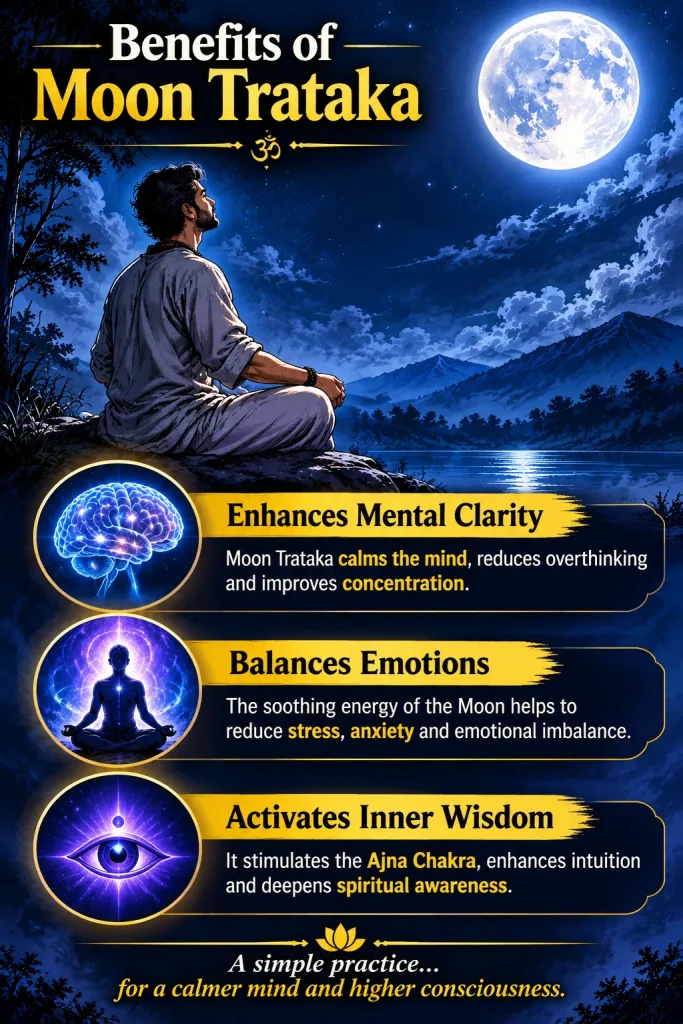
Benefit of Chandra trataka gazing practice
There are emotional as well spiritual benefit of practicing moon trataka. You can see them here as bellow
- Moon trataka calms the nervous system and reduce anxiety level.
- It support mental clarity and emotional balance.
- Regular practice of moon trataka gazing can open ajna chakra known as third eye awakening.
- It help with better sleep and insomnia cure.
- Moon gazing deepen your sense of mindfulness and presence of mind.
- According to spiritual belief moon gazing can enhance your intuition ability and remote viewing.
Remote viewing is like a psychic ability to experience the activity happen from distance. I have a personal experience from my childhood that I still remember clearly.
One day, while sitting in my classroom, my mind suddenly went completely blank. Physically, I was at my desk, but it felt as though my awareness had travelled about 60 kilometres away to my village, where I was watching events unfold.
I saw a vehicle accident just outside the village, and a person was badly injured. Then, just as suddenly, I came back to full awareness in the classroom.
That evening, news arrived from home that an accident had indeed taken place outside the village. I was astonished, because the details matched exactly what I had seen earlier.
At that time, I was practicing antar trataka (inner gazing). I had no control over what was happening. These experiences came on their own, and I was merely an observer.
Note: “This is my personal experience, and everyone’s experience with trataka is different. I share it not as a promise, but to show how powerful the mind can become in deep concentration.”
Read : How to Achieve a Thoughtless State in Trataka Sadhana (Beginner’s Guide)
How to Practice Moon Trataka
- Choose the time and place. Find a quiet outdoor spot with a clear view of the moon. A full moon or a clear night when the moon is bright is ideal.
- Sit comfortably. Sit upright with a straight spine, on the ground or in a chair, in loose, comfortable clothing. Relax your shoulders and rest your hands on your knees.
- Begin external gazing (bahiranga trataka). Look at the moon with a soft, steady gaze, without straining your eyes. Blink gently whenever you need to, or let your eyes water naturally, then bring your attention back to the moon.
- Move to internal gazing (antaranga trataka). Close your eyes and turn your attention to the eyebrow center (Bhrumadhya, also called the Ajna chakra). Hold the glowing afterimage of the moon in your mind’s eye for as long as it remains.
- Set the duration. Beginners can start with 5 to 10 minutes and slowly increase to 15 to 20 minutes as concentration improves.
- Close the practice with palming. Rub your palms together until warm, then place them gently over your closed eyes for a few moments. Sit quietly before getting up.
The best time for Chandra Trataka (gazing at the moon) is considered to be the 12th day of the lunar phase. It is understood that over the following four days, the moon waxes toward its full form, while during the four days that follow, it wanes.
This cycle makes it easier to perceive shifts in energy, which in turn simplifies the practice itself. This is based on my own personal experience.
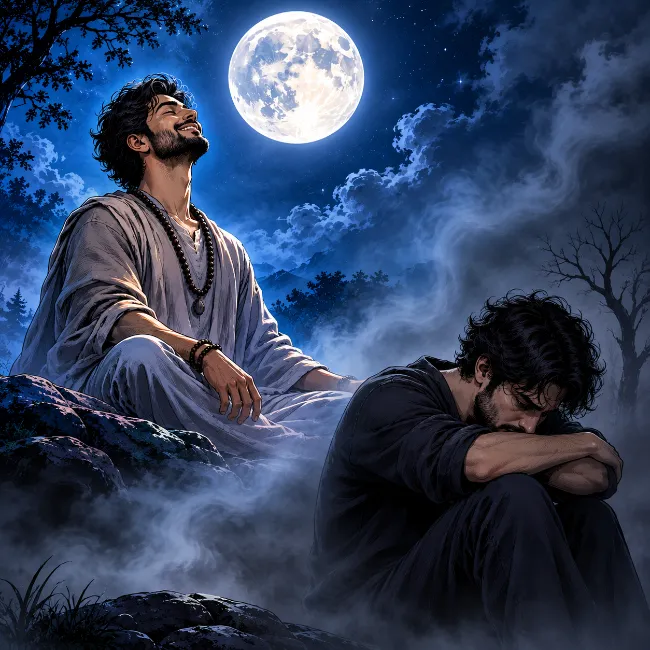
Sun Gazing vs Moon Gazing Trataka
| Meaning | Surya = sun, trataka = steady gazing | Chandra = moon, trataka = steady gazing |
| Type of trataka | External, distant gazing | External, distant gazing, followed by inner gazing at the afterimage |
| Traditional association | Prana (life force), vitality, energy | Coolness, calm, intuition, emotional balance |
| Effect on the mind | Said to bring alertness, energy and clarity | Said to bring calm, softness and emotional balance |
| Eye safety | High risk. Eye doctors warn of solar retinopathy, which can happen in seconds, is often painless, and has no known treatment | Gentle on the eyes, but straining or forcing the gaze can cause dryness and discomfort |
| Safe duration | No safe duration established | Beginners: 5 to 10 minutes, building to 15 to 20 minutes |
| Best time | Caution advised even at sunrise and sunset, since lower UV does not mean zero risk | Clear nights, traditionally the full moon, or the 12th lunar day |
| Level | Advanced, and direct gazing is not recommended | Beginner-friendly, after bindu and candle trataka |
| Do sunglasses or practice help? | No. Neither makes direct sun gazing safe | Not applicable |
| Who should avoid it | Anyone with eye conditions, recent eye surgery, light sensitivity or migraines, and children | Anyone with a serious eye condition or migraines, unless a doctor approves |
| Safer alternative | Closed-eye sun meditation, or candle and dot trataka | Practice softly, blink when needed, and use palming afterward |
| Main purpose | Concentration, connection with nature and energy | Calm, focus, willpower and emotional balance |
Precaution and tips for better practice
Trataka is a hatha yoga practice in which the eyes stay open while focusing on a single object. Done incorrectly, it can strain the eyes, so approach it gently and keep these points in mind:
- Never force the practice. Keeping your eyes open for too long causes dryness. If you feel the urge to blink, close your eyes for a moment, calm your mind, and then resume.
- Check your eye health first. If you have a serious eye condition or suffer from migraines, avoid trataka unless your doctor approves.
- Wear loose, comfortable clothing. This is especially helpful for night practice, so you can sit for an extended period without physical restriction or discomfort.
- Practice daily, with ease. Treat it as a calming routine, not a challenge. Progress in trataka depends on the steadiness of your mind, not on how long or how wide you can keep your eyes open.
- Focus on the object, not on your eyes. Trataka can be practiced with open or closed eyes. When your eyes are open, rest your attention on a single object and keep your mind calm instead of fixating on keeping your eyes open.
The goal of Chandra Trataka is to gaze at the moon steadily, without blinking. However, this ability develops slowly through regular practice, so never force your eyes to stay open.
In the beginning, gaze softly and blink whenever you need to, or let your eyes water naturally, then return your attention to the moon. Over days and weeks, you will find that you can gaze for longer without the urge to blink.
The key is a gentle, relaxed gaze with a calm mind, not strain.
Read : Sun Meditation (Surya Trataka): Tradition, 3 Risks & Safer Ways
Conclusion
Moon Trataka, also known as Chandra Trataka, is a simple yet powerful yogic practice that uses the calm, cool presence of the moon to steady the mind.
As a form of distant trataka, it is traditionally believed to strengthen willpower, improve focus, and bring a sense of inner peace.
The practice moves from external gazing at the moon to internal gazing at its afterimage at the eyebrow center, and finishes with palming to relax the eyes.
The most important principle of Moon Trataka is gentleness. The aim is a steady, unblinking gaze, but this develops slowly through regular practice, never through force.
Let your eyes blink or water when they need to, then return your attention to the moon. Success depends on the calmness and concentration of your mind, not on how long you can keep your eyes open.
Because many practitioners find that the moon affects their mood, approach the practice with patience and awareness. If you have an eye condition or suffer from migraines, consult your doctor first.
If you feel strain, dizziness, or restlessness at any point, stop and rest.
Experiences with Moon Trataka differ from person to person. Some feel deep calm, while others notice emotional shifts or spontaneous inner experiences, as I did in my own practice.
Treat these as observations, not goals. Practice a little each day, stay relaxed, and let the benefits of Moon Trataka unfold naturally.
FAQ about moon trataka people commonly ask
What is Moon Trataka?
Moon Trataka, also called Chandra Trataka, is a yogic concentration practice in which you gaze steadily at the moon, then close your eyes and hold its afterimage at the eyebrow center. It is a form of distant trataka.
What is the best time to practice Moon Trataka?
A clear night with a bright moon is ideal, and the full moon is the traditional choice. Choose a quiet time when you feel calm and are not overly tired.
Can beginners practice Moon Trataka?
Yes. It is gentle and beginner-friendly when done correctly. Start with 5 to 10 minutes, keep the gaze soft, and increase the time gradually.
Should I blink during Moon Trataka?
The goal is a steady, unblinking gaze, but it develops slowly with regular practice. In the beginning, blink or let your eyes water whenever needed, then return your attention to the moon. Never force your eyes open.
How long should I practice?
Beginners can start with 5 to 10 minutes and slowly work up to 15 to 20 minutes as concentration improves. Finish with palming to relax the eyes.
Is Moon Trataka safe for everyone?
Moonlight is gentle, but trataka can strain the eyes if forced. If you have an eye condition or suffer from migraines, consult your doctor first. Stop if you feel strain, dizziness, or restlessness.
What is the difference between Moon Trataka and candle Trataka?
Candle trataka is a near trataka, with the gaze on a close flame. Moon Trataka is a distant trataka. Tradition links the candle with fire energy and the moon with a cool, calming quality.
“Have you tried Moon Trataka? Share your experience in the comments below.”
Follow Us & Stay Connected
Enjoyed this article? Follow us for more fascinating stories, mysteries, spirituality and the unexplained.


