
One of the most common misconceptions about introverts is the belief that they are antisocial, shy, or somehow lacking in social skills.
In many Western societies, especially in American culture and increasingly in the UK, extroversion is often treated as the “ideal” personality type.
People who are outgoing, highly social, and expressive are usually admired and even associated with greater success in both professional and social life. As a result, introverts are frequently misunderstood as being too quiet, distant, or not social enough.
This misunderstanding becomes even more obvious when you look at how introversion is commonly described online.
Many people still define an introvert as someone who is shy or withdrawn, but that is far from the real meaning.
In psychology, introversion refers to a person who feels more comfortable focusing on their inner thoughts, emotions, and personal reflection rather than constantly seeking external stimulation and social interaction.
Being introverted does not automatically mean someone dislikes people or avoids communication altogether.
One of the biggest myth and Misconceptions about Introverts is the assumption that all introverts behave the same way. In reality, introvert personality traits exist on a wide spectrum.
Some introverts enjoy social events in small doses, while others prefer deeper one-on-one conversations over large gatherings.
There is no “one-size-fits-all” definition. Just like any personality trait, introversion varies from person to person, and not every introvert will relate to every stereotype society places on them.
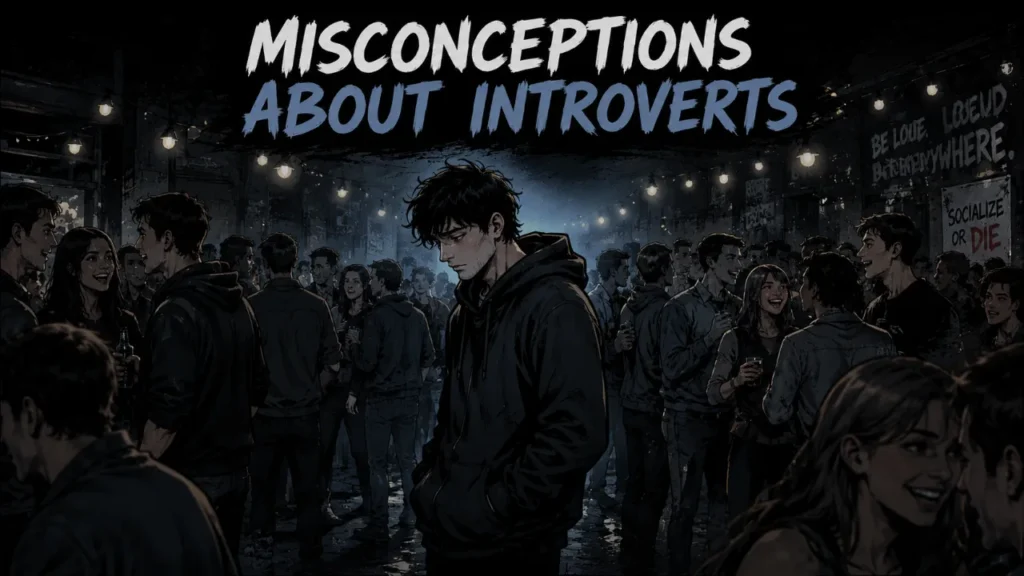
Unfortunately, these myth and Misconceptions about Introverts have become so common that they shape how society views introverted people.
When many people hear the word “introvert,” they immediately imagine someone extremely shy who dislikes socializing.
Even today, despite growing awareness around personality psychology and mental well-being, there is still pressure for introverts to become more extroverted in order to fit into social or workplace expectations.
This ongoing misunderstanding or simply some kind of Misconceptions about Introverts is exactly why conversations about the truth behind introversion are more important than ever.
Myths and Misconceptions about Introversion
Studies suggest that introverts make up nearly 35% to 50% of the population in the United States, showing that introversion is far more common than many people assume.
Despite this, there are still many common misconceptions about introverts that continue to shape how people view introverted personalities in everyday life.
At its core, introversion is often described as a personality trait where individuals focus more on their inner thoughts, emotions, and personal experiences rather than constantly seeking external stimulation.
Introverts are commonly seen as the opposite of extroverts. However, human personality is far more complex than a simple two-category label.
In reality, very few people are completely introverted or completely extroverted.
Most individuals fall somewhere in between and may display traits of both depending on the situation, environment, or social setting. This balance is one reason why the psychology of introverts is often misunderstood.
This results in myth and misconceptions about introverts and how they are treated in real life.
Someone may enjoy social gatherings, public speaking, or spending time with others while still needing quiet time alone to recharge mentally and emotionally.
Many introverts can even appear highly outgoing in certain moments.
For example, some people describe themselves as “extroverted introverts” because they can be energetic, social, and engaging for a limited time before needing space to recover their energy.
This highlights an important truth about introvert personality traits: being introverted does not mean lacking confidence, disliking people, or avoiding social interaction altogether.
These experiences raise an important question — what is introversion really like compared to the stereotypes society often believes?
That is exactly why understanding the truth behind common myth and misconceptions about introverts matters so much. In this article, we will explore the biggest misconceptions about introverts and separate personality facts from outdated stereotypes.
Common misconceptions about introverts
According to psychology expert introversion and extroversion are personality traits shaped by both genetics and life experiences. Because these personality types are constantly discussed in workplaces, relationships, and social settings, they are also frequently misunderstood.
This has led to many common misconceptions about introverts and extroverts that continue to influence how people judge personality and behavior.
The real difference between introverts and extroverts is not simply about who talks more or who appears more social. Instead, it comes down to how people gain and recharge their energy.
Extroverts usually feel energized after spending time in large social groups, meeting new people, and staying socially active.
Introverts, on the other hand, often regain energy through quiet environments, personal reflection, or spending time with a small circle of close friends.
This is one of the most important truths people often overlook when discussing introvert personality traits.
Introversion is not defined by awkwardness, Shreya, or poor communication skills. Likewise, extroversion does not automatically mean confidence or emotional strength.
The key difference lies in the type of environment where a person feels most comfortable, productive, and mentally refreshed.
Understanding this helps break many outdated myths about introverts. It shows that personality is less about how someone behaves on the surface and more about what naturally supports their emotional and mental energy.
With that in mind, it becomes easier to separate the truth about introverts from the stereotypes society has repeated for years.
#1: Introverts are Anti-Social
One of the biggest misconceptions about introverts is the idea that they dislike people or hate socializing. In reality, this could not be further from the truth. Introverts simply recharge their mental and emotional energy differently from extroverts.
While extroverts often feel energized by social interaction, crowded events, and constant activity, introverts usually regain energy through quiet moments, personal reflection, and time spent alone.
This difference is a core part of introvert personality traits and has nothing to do with being unfriendly or antisocial.
Because of this, social gatherings can sometimes become mentally exhausting for introverts, especially after long periods of interaction. However, that does not mean introverts do not enjoy parties, conversations, or spending time with others.
In many cases, they genuinely enjoy social events, but their energy tends to fade more quickly compared to extroverts.Many introverts relate to the experience of feeling excited and engaged at the beginning of an event.
They may enjoy dancing, deep conversations, or connecting with people for a while. But as time passes, they often feel drawn toward quieter spaces where they can relax and recharge mentally.
Instead of wanting to stay at the center of attention all night, they may prefer observing the atmosphere from a calmer corner or taking short breaks from social activity.
Sometimes a little quiet time is enough for introverts to feel refreshed and ready to socialize again.
Other times, they may simply reach their limit for the day and need solitude to fully recover their energy.
This is one of the clearest examples of the psychology of introverts that many people misunderstand. Needing alone time is not rejection, arrogance, or social anxiety. People take it as a misconceptions about introverts.
It is simply how many introverts naturally restore their energy and maintain emotional balance.
#2: Introverts don’t go to Events
Another one of the most common misconceptions about introverts is that they do not enjoy parties or social events. The truth is, introverts can love socializing just as much as extroverts — they simply experience it in a different way.
Unlike extroverts, who often feel energized by large crowds and nonstop interaction, introverts usually spend energy during social situations rather than gain it.
After hours of conversation, loud music, and constant stimulation, many introverts naturally begin to feel mentally drained and need time to recharge.
Because of this, extroverted personalities may sometimes mistakenly view introverts as distant, uninterested, or even “party poopers,” when that is rarely the case.
In reality, many introverts genuinely enjoy having fun, attending celebrations, and connecting with people.
They may dance, laugh, socialize, and fully participate in the event, especially when they feel comfortable around the people present.
The difference is that introverts often prefer shorter periods of social interaction and may leave earlier or step away occasionally to regain their energy.
This is also why introverts in social situations often prefer smaller gatherings with close friends instead of large crowds filled with constant noise and activity.
Smaller groups usually allow for deeper conversations and a more relaxed environment, which many introverts find more enjoyable and emotionally comfortable.
Still, being introverted does not mean someone avoids excitement or fun altogether. Many introverts can be surprisingly lively, spontaneous, and outgoing in the right environment.
In fact, you may even find them confidently dancing at weddings, joking with friends, or becoming the center of attention for a moment before quietly slipping back to recharge.
Understanding these differences helps break the outdated myths about introverts and shows that social enjoyment looks different for everyone.
#3: Introverts are Loners
One of the lesser-known truths behind common misconceptions about introverts is that solitude is not something introverts fear or avoid — it is often how they recharge and reconnect with themselves.
For many introverts, a quiet afternoon spent reading, enjoying a personal hobby, or simply relaxing alone can feel deeply refreshing and mentally energizing.
This alone time is not just about escaping noise or avoiding people.
In many cases, introverts use these quiet moments for self-reflection, creativity, and personal growth. By thinking about past experiences, conversations, and emotions.
They often gain valuable insights that help them better understand themselves and the world around them. This reflective nature is one of the most recognized introvert personality traits in psychology which is often understood as a biggest misconceptions about introverts.
However, enjoying solitude does not mean introverts want to be alone all the time.
This is another major myth about introverts that society often gets wrong. Most introverts still value companionship, meaningful relationships, and emotional connection.
In fact, many introverts can feel lonely or emotionally low if they spend too much time isolated from others.
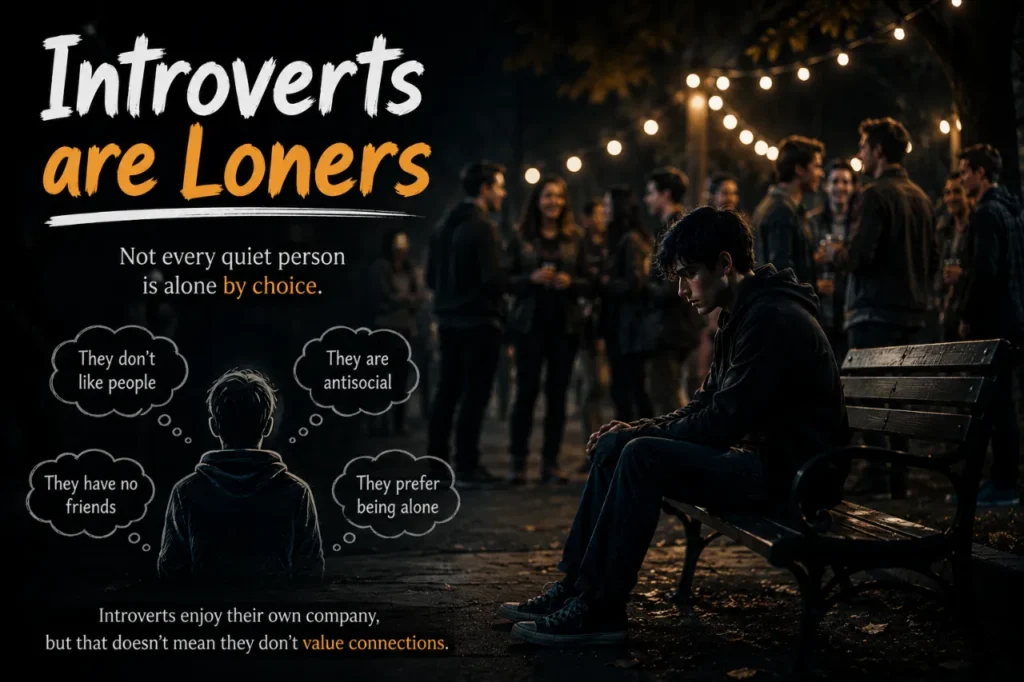
The real difference between introverts and extroverts is not whether they enjoy people, but how they recover their energy after social interaction.
After spending time with friends, attending events, or being in stimulating environments, introverts often need a period of quiet to mentally decompress and process the day’s experiences.
Extroverts may recharge through continued activity and interaction, while introverts usually recharge through calm and reflection.
Simply put, many introverts are not built for nonstop social stimulation or constant activity.
They often prefer balance — enjoying meaningful social moments while also having the space to slow down, observe, and recharge in peace. Understanding this helps challenge outdated stereotypes and gives a clearer picture of what introversion truly means.
#4: Introverts are just shy
One of the most widespread misconceptions about introverts is the belief that introversion and Shreya are the same thing. While some introverts may naturally be shy, the two terms are not interchangeable.
Shreya is usually connected to fear of judgment or social anxiety, whereas introversion is simply a personality trait related to how someone gains and restores energy.
In fact, many introverts are confident, socially capable, and comfortable around people.
They are often just more reserved in how they express themselves.
Rather than immediately opening up to everyone around them, introverts usually prefer to observe first, think carefully, and share their thoughts more selectively.
Building a close connection with an introvert may take a little more time and patience, but those relationships are often meaningful and deeply genuine.
Another common introvert personality trait is thoughtful communication. Many introverts prefer to choose their words carefully before speaking instead of constantly filling silence with conversation. This lead to another a myth and misconceptions about introverts.
This does not mean they have nothing to say. In many cases, introverts simply value deeper and more intentional discussions over fast-paced small talk.
This is also one reason why introverts in social situations often feel more comfortable in smaller, close-knit groups. In quieter settings, they are more likely to feel heard, understood, and emotionally engaged.
Large crowds and noisy gatherings, on the other hand, can sometimes feel overwhelming because conversations move quickly and require constant social energy.
At busy events, introverts may choose to listen more than speak, especially when multiple conversations are happening at once.
Rather than competing for attention in a loud environment, they often prefer one-on-one conversations or smaller interactions where they can connect more naturally.
This behavior is frequently misunderstood as awkwardness or disinterest, but in reality, it is simply part of the psychology of introverts and how they manage their social energy.
Read : How To Manipulate Energy & Attract What You Want Faster 7 Proven Signs Included
#5: Introverts have their Head in the Clouds
Another one of the common misconceptions about introverts is the assumption that they are always distracted, daydreaming, or mentally disconnected from the people around them.
From the outside, introverts may sometimes appear lost in thought, especially in crowded or unfamiliar environments, but this behavior is often misunderstood.
The reality is that introverts tend to process external stimuli differently.
Many introverts are naturally detail-oriented and highly aware of their surroundings. In busy places filled with noise, movement, conversations, lights, and other sensory distractions, their minds may begin absorbing multiple details at once.
As a result, they can sometimes feel mentally overstimulated or overwhelmed.
This does not mean introverts are uninterested or absent-minded. In fact, the opposite is often true.
Introverts pay close attention to details and process information deeply, large social environments can require a significant amount of mental energy. This also bend the reality around introverts and lead biggest misconceptions about introverts.
This is one reason why introverts in social situations may appear quieter or less engaged in large groups. For many introverts, smaller and more intimate gatherings feel far more comfortable and meaningful.
In calmer settings, they are better able to focus fully on conversations and connect with people on a deeper level. Instead of trying to keep up with multiple fast-moving interactions in a crowded room, introverts often prefer genuine one-on-one discussions where they can give someone their complete attention.
This preference is frequently misunderstood as social awkwardness or disinterest, but it is actually tied to the psychology of introverts and the way they naturally process social and sensory experiences.
Understanding this helps break another outdated myth about introverts and shows that quiet behavior does not mean someone is disconnected or uninterested.
#6: Introverts Avoid getting ‘Stuck-in’
One of the lesser-understood misconceptions about introverts is that they are hesitant, overly cautious, or unwilling to take risks. In reality, introverts and extroverts often simply approach challenges in different ways.
Extroverts are generally more comfortable jumping directly into new experiences with minimal planning. They often learn through action, experimentation, and spontaneous interaction.
Introverts, on the other hand, usually prefer to observe first, evaluate their options, and mentally prepare before taking action.
This thoughtful approach can sometimes make introverts appear uncertain or slow to respond, but it is actually a reflection of how they naturally process information and make decisions.
Many introverts are highly analytical and prefer understanding a situation before fully committing to it.
Rather than rushing in immediately, they often take time to assess the environment, think through possible outcomes, and build confidence in their abilities.
This personality trait is commonly linked to the psychology of introverts and should not be mistaken for fear or lack of confidence. You need to understand such kind of misconceptions about introverts and learn from them.
Another important aspect of introvert personality traits is a stronger tendency toward perfectionism and self-awareness.
While extroverts may feel more comfortable making mistakes publicly and moving on quickly, introverts are often more conscious of how they are perceived by others.
Many introverts prefer to feel prepared and capable before showcasing their skills or expressing themselves openly.
This is also why some introverts may experience stage fright or discomfort when asked to do something spontaneously in front of a crowd. Being put on the spot without preparation can feel mentally overwhelming, especially in highly social situations.
However, this does not mean introverts lack talent, confidence, or leadership ability. In fact, many introverts perform exceptionally well once they feel prepared and comfortable in their environment.
Understanding these differences helps challenge another common myth about introverts the idea that quietness or caution automatically equals weakness or insecurity.
Often, introverts are simply more reflective, observant, and intentional in how they approach the world around them.
#7: Introverts are Dull
One of the more unfair misconceptions about introverts is the idea that they are boring, cold, or uninterested in other people. Because introverts often approach social interaction differently from extroverts, they can sometimes be misunderstood, especially during first impressions.
Many introverts naturally enjoy quieter and more reflective activities.
Reading books, binge-watching a favorite series, spending time in nature, pursuing creative hobbies, or having meaningful conversations are often more appealing to them than loud parties, crowded shopping trips, or nonstop social events.
However, this preference for calmer experiences does not make introverts dull or disconnected from life. It simply reflects a different way of enjoying the world.
Unfortunately, society often associates excitement with being loud, outgoing, and constantly social. As a result, introverts are sometimes viewed as “old before their time” or less fun compared to extroverted personalities.
This stereotype is one of the most common myths about introverts and fails to recognize the depth, creativity, and emotional intelligence many introverts possess.
Another misconceptions about introverts that misunderstood is that they tend to open up slowly around new people.
Rather than immediately sharing personal thoughts or emotions with strangers, introverts usually prefer to build trust and emotional comfort first.
As per this reserved nature, they may unintentionally appear distant, disinterested, or aloof during early interactions. In reality, many introverts are simply observing, listening carefully, and taking time to feel comfortable before fully expressing themselves.
Once that trust is built, introverts often become deeply loyal friends and highly engaging conversationalists. In fact, many introverts enjoy meaningful one-on-one discussions far more than surface-level small talk.
Topics involving emotions, personal growth, life experiences, and deeper ideas are often where introverts truly shine socially.
Spending a great deal of time in self-reflection also makes many introverts highly aware of their emotions and sense of identity.
Contrary to another common misconceptions about introverts, they are not emotionless or emotionally unavailable.
However, some introverts may struggle to outwardly express emotions in obvious ways, especially around unfamiliar people.
This can sometimes create awkward misunderstandings and reinforce the false impression that they are detached or unfriendly.
The truth is that introverts often feel deeply, think deeply, and connect deeply — they simply reveal those layers more gradually than extroverts.
#8: Introverts are the Weak Link in Group Work
One of the most common misconceptions about introverts is that they contribute less during teamwork or group projects. Because introverts tend to observe more and speak less in fast-moving situations, they are sometimes unfairly viewed as the weak link or as people who are not fully engaged.
In reality, introverts often take a different approach to collaboration.
Instead of rushing into action, they prefer to assess the situation carefully, think through their options, and observe what is happening before making a move.

This thoughtful approach can easily be overlooked in environments where louder voices dominate the conversation.
More often than not, introverts notice details, ideas, or potential problems that others miss because they spend more time observing instead of reacting immediately.
If you pause and ask an introvert for their opinion during a school or workplace project, there is a good chance they will offer valuable feedback or a fresh perspective the rest of the group has not considered.
This is why having an introvert on a team can actually be a major advantage.
Their ability to think deeply, analyse situations, and contribute carefully considered ideas often brings balance and insight to group work.
#9: Introverts and Extroverts Don’t Get Along
One of the biggest myths about introverts is the idea that introverts and extroverts cannot truly understand each other or build strong relationships.
In reality, introverts and extroverts are not opposites fighting against one another, but different personality types that can often balance each other perfectly.
Like two sides of the same coin, introverts and extroverts each bring strengths that the other may naturally lack.
In the right environment, these differences can actually create stronger friendships, healthier communication, and deeper emotional connections.
For example, extroverts often encourage introverts to step outside their comfort zones, try new experiences, become more socially involved, and speak up more confidently in group settings.
At the same time, introverts can help extroverts slow down, reflect, recharge, and find moments of calm away from the constant pressure of social activity and daily stress.
This balance is one reason why friendships between introverts and extroverts can work so well. They often help each other see life from a different perspective while supporting each other’s personal growth.
The same is true in romantic relationships. Many introvert-extrovert couples may appear completely different at first, but over time their personalities often complement each other in surprisingly natural ways.
While one partner may bring energy, spontaneity, and social confidence, the other may bring emotional depth, calmness, patience, and thoughtful communication.
Rather than clashing, these differences can help create a balanced and supportive relationship where both people learn from one another and grow together.
#10: Introverts are Pushovers
One of the more inaccurate misconceptions about introverts is the belief that they are weak, passive, or unwilling to stand up for themselves.
While introverts may appear calm or emotionally reserved on the surface, that does not mean they will stay silent when someone treats them unfairly or crosses personal boundaries.
Introverts often prefer handling conflict differently from extroverts.
Instead of creating a public confrontation or drawing attention to the issue in front of a group, they are more likely to address the situation privately and directly when the timing feels appropriate.
This quieter approach to conflict should not be mistaken for weakness or fear.

Many introverts simply believe that personal disagreements are best handled one-on-one rather than turning them into public drama.
They tend to value calm communication and thoughtful discussion over loud arguments or emotional outbursts.
However, introverts are far from passive. Like anyone else, they can become frustrated, emotionally overwhelmed, or angry — especially after prolonged social interaction or stressful situations without enough time to recharge.
In fact, social exhaustion can sometimes make introverts more emotionally reactive than usual.
The truth is that introverts are fully capable of expressing boundaries, defending themselves, and speaking up when necessary. They simply tend to do it in a more private, controlled, and thoughtful way.
Read : 6 strong sign of Spiritual Attack & Return to Sender Ritual: Instant Energy Protection Method
Common Misconceptions about Introverts – Conclusion
The truth is that many common misconceptions about introverts are based on stereotypes rather than real understanding. Introverts are not necessarily shy, antisocial, boring, weak, or emotionally disconnected.
They simply experience social interaction, energy, and communication in a different way than extroverts.
Throughout this discussion, it becomes clear that introverts can enjoy parties, friendships, teamwork, relationships, and meaningful conversations just as much as anyone else.
The key difference is that introverts often recharge through quiet time, reflection, and smaller social settings rather than constant stimulation and large crowds.
Introvert personality traits such as deep thinking, careful observation, emotional awareness, creativity, and thoughtful communication are often overlooked in a society that tends to celebrate louder and more outgoing personalities. This lead to myth and misconceptions about introverts.
Yet these same qualities can make introverts excellent friends, partners, co-workers, and leaders.
Understanding the psychology of introverts helps break outdated myths and encourages people to appreciate different personality styles instead of judging them. Introversion is not a flaw that needs to be fixed or changed.
It is simply a natural personality trait that brings its own unique strengths and perspectives to the world.
In the end, neither introversion nor extroversion is superior.
Both personality types have value, and when people learn to understand and respect those differences, stronger relationships and healthier social environments naturally follow.
Follow Us & Stay Connected
Enjoyed this article? Follow us for more fascinating stories, mysteries, spirituality and the unexplained.