Searches for a winter solstice rituals jump every December, and it’s easy to see why. The solstice is the day your half of the world leans furthest from the sun.
In the Northern Hemisphere that’s December 21 this year, and it brings the shortest stretch of daylight we get. After that the days start getting longer, only by a few seconds at first, then faster into January.
Nothing dramatic happens. People have paid attention to it for a very long time anyway.
Newgrange in Ireland is a good example. Its builders, more than 5,000 years ago, left a narrow opening above the entrance so that around the solstice, for about seventeen minutes at sunrise, a beam of light reaches the floor of the chamber inside.
Stonehenge lines up with the solstice too, and people still gather there in December.
Other cultures have their own names for the day: Yule in northern Europe, Dongzhi in China, where families eat dumplings or tangyuan, and in India the sun’s northward turn, Uttarayana, which is celebrated at Makar Sankranti a few weeks later.
I don’t think the old sites are the real point. What they show is that people wanted a marker, one evening when it was fine to stop.
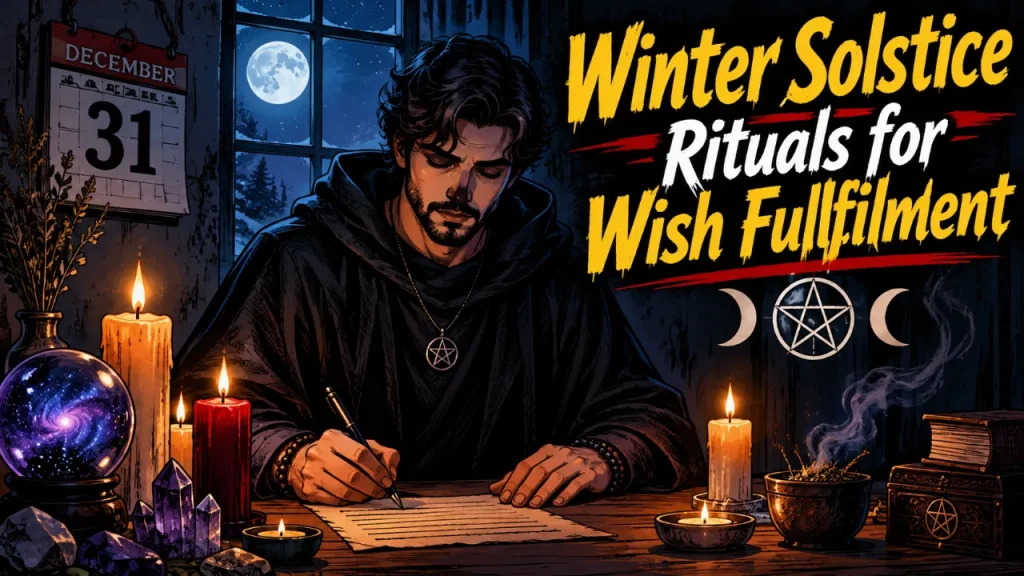
A winter solstice ritual can be small: a candle, twenty quiet minutes, and a notebook. It doesn’t have to be religious, and there’s no single right way to do it. What matters is that you set the time aside and give it your full attention.
This guide covers what the solstice means, how different traditions mark it, and how to set up a ritual at home, including a candle Trataka version for the longest night.
Why do we celebrate winter solstice rituals every year?
For most of history, the longest night was a practical worry as well as a spiritual one.
Food stores were running low, the cold was setting in, and nobody could be certain how long winter would last.
Lighting a fire and sitting close to other people was one way of getting through it.
We don’t face that kind of winter now, but the habit has stayed.
December is dark, busy, and often tiring, and many people welcome an excuse to slow down. That’s part of why the solstice has become popular again, including among people who don’t follow any religion.
A candle on the table, a quiet dinner, a phone left in another room: these are small things, but they work as a pause.
The Winter Solstice Ritual is typically a simple ritual that clarifies your desires and connects you with nature.
Performed on the longest night of December, it connects you to your future and strengthens your faith. Simple ritual that strengthens your self-confidence can be part of this ritual. The ritual consists of:
- 11 wishes that you believe in, hope to achieve, and are dedicated to.
- 1 wish that requires your effort, is your choice, and is possible for you to fulfil.
Let’s learn more about this ritual and meditation performed on the night of December.
The spiritual meaning of the winter solstice
The word that comes up most around the winter solstice is rebirth. The longest night is also the point where the days start to lengthen again, so many traditions treat it as a small version of a bigger idea: something ends, and something else gets room to begin.
Different cultures tell this story in their own way. In northern Europe, Yule was a midwinter feast with fire, a yule log, and evergreen branches brought indoors.
In China, Dongzhi marks the point when yang, the bright, active side of yin and yang, starts growing again, and families often eat tangyuan together.
In Iran, Yalda night is spent awake with family and poetry, with pomegranates and watermelon on the table, until morning.
You can start trataka meditation as this practice can be more meaningful and enhance your psychic ability.
Basically this is my own personal experience and I can say that doing meditation and wish manifestation ritual can be useful. From different part of word people celebrate this time in their own style.
You don’t have to follow any of these traditions to use the idea. Sitting in a dim room for a few minutes and asking yourself what you want more of next season is enough to count as a ritual.
How to create a winter solstice celebration: 5 midwinter rituals
Winter solstice rituals celebration doesn’t have to involve complicated rituals or special practices. It’s simply a time to slow down, enjoy the present moment, and think about what you want to bring into your life as the days slowly become brighter.
Whether you choose to celebrate alone, spend time with friends, or gather with family, these simple rituals can help you welcome the changing season and make the winter solstice a meaningful experience. Below are some easy unique and manifestation fulfil rituals that you can perform as a winter solstice rituals.
Read : New Moon Rituals That Actually Work 4 Lunar Phase and their Effective Rituals
#1. Candle lightening rituals
Lighting candles is a simple and meaningful way to celebrate the winter solstice. As you know candle trataka gazing meditation is one of the most powerful types of trataka gazing and you can perform some simple but unique way to perform candle rituals.
The candle flame represents hope, warmth, and the return of sunlight after the longest night of the year. You can keep this ritual simple or give it a deeper personal meaning.
If you are doing candle rituals alone at midnight time, light a candle in a quiet room and take a few slow, deep breaths. Spend a few minutes watching the flame and thinking about what light means to you.
The lights of candle could represent gratitude, inner strength, hope, or the courage to move forward. Staring at light of candle make your intention more clearly and you can be more connected with your true-self.
If you are celebrating with family or friends, give everyone a candle and ask them to share one thing they feel grateful for. Turn off the bright lights and let the candles create a peaceful atmosphere.
Enjoy the moment together and appreciate the warmth, comfort, and happiness that come from being surrounded by loved ones.
#2. Write down your wishes and release them
You may heard about journal and sigils magic before. The winter solstice is a good time to let go of things that no longer bring value to your life.
It could be negative habits, unwanted expectations, past worries, or emotions that have been holding you back.
Writing down your thoughts in a book journal can help you understand what you are ready to leave behind. It also clear your thoughts and intention toward your life.
Start by sitting in a quiet place with a notebook. Write freely about the things you no longer want to carry into the new season.
Don’t worry about perfect sentences; simply put your thoughts and feelings on paper. Many practitioner believe that writing down your thought can make them more visible to you and connect with your intention.
When you finish, you can tear the page into small pieces as a symbolic way of letting go. This can help you to get rid from bad habit or let go from past.
If you prefer something simpler, close your notebook, take a deep breath, and remind yourself that you are ready to move forward without carrying the weight of the past.
#3. Reflect and set intentions
Instead of making strict New Year resolutions, use the winter solstice rituals as a chance to set simple intentions for the year ahead. Lot of people face issue after some time they set their New Year resolution.
Think about how you want to feel, what kind of life you want to create, and the positive changes you would like to make. Instead of setting new resolution work on how much you can improve yourself.
You can also take a moment to appreciate everything you have already done, even the small things that made you feel proud or happy. Sometime working on small steps and things you already have can be very useful.
After your meal, sit quietly by candlelight and reflect on your thoughts.
Imagine how you can bring these intentions into your everyday life.
Focus on qualities such as peace, confidence, kindness, patience, or happiness, and think about how you can make them a natural part of your journey in the coming year.
Adapt them as a part of your life and feel the change.
#4. Walk alone in nature at the time of night
You may wonder spending time in nature is a simple way to celebrate the winter solstice rituals and feel more connected to the world around you.
Even a few minutes outside can help you feel calm, relaxed, and present. This is natural as it keep you in present moment and you escape from your thoughtful reality.
Wear warm clothes and step outside after sunset. Take a moment to look at the sky, notice the stars and clouds, or enjoy the quiet surroundings. This will keep you in present moment and mindfulness.
You can go for a short evening walk, breathe in the fresh air, or simply stand still and enjoy the peaceful atmosphere.
As you spend time outdoors, think about the changing seasons and the natural cycle of darkness and light. Remind yourself that darkness doesn’t last forever.
Just as the days slowly become brighter after the winter solstice rituals your life also has room for fresh beginnings, growth, and positive changes.
#5. Create a gratitude space or light altar
You don’t have to follow any spiritual beliefs to create a small space for gratitude during the winter solstice rituals and meditation.
You just need a few meaningful items that remind you of the good things in your life.
You can use candles, fresh flowers, family photos, stones, or handwritten messages from people you love.
Arrange these items on a table, kitchen counter, or bedside stand to create your own little gratitude corner. Spend some time each days so it connect you with these things.
Each object can represent a special memory, someone you appreciate, or something positive you want to welcome into your life.
You can keep this space for a few days after the solstice or remove everything once the celebration is over. This will make your winter solstice rituals much connected with your intention.
Taking time to create a gratitude space helps you focus on the positive things in life, especially during the darker winter months. It can also bring a little more peace, comfort, and happiness into your daily routine.
comparison of winter solstice rituals vs new year resolution
| Factor | Winter Solstice Ritual | New Year Resolution |
|---|---|---|
| When | Around December 21 (Northern Hemisphere), the longest night | December 31 to January 1 |
| Basis | Astronomical: the sun’s lowest point before days lengthen | Calendar: the start of a new year |
| Core idea | Pause, reflect, release, welcome the returning light | Set goals and commit to change |
| Direction | Inward and reflective (“What do I want to put down?”) | Outward and action-focused (“What will I achieve?”) |
| Typical actions | Candle lighting, meditation, journaling, a quiet meal, release writing | Writing goals, planning habits, tracking progress |
| Time horizon | One evening, with an intention for the season | The whole year |
| Tone | Calm, symbolic, spiritual or reflective | Motivational, practical, often pressured |
| Typical themes | Rest, gratitude, letting go, renewal | Health, money, career, habits |
| Success measure | A felt sense of pause and clarity | Specific, measurable results |
| Common pitfall | Overcomplicating it or making big promises | Setting goals too big and giving up within weeks |
| Origins | Ancient and cross-cultural (Yule, Dongzhi, Yalda, Newgrange) | Ancient too (Babylonian new year vows), but now largely secular |
| Tools needed | A candle, a notebook, a quiet space | A notebook, app, or planner |
| Best for | People who want reflection and calm | People who want structure and concrete goals |
Why winter solstice rituals are different from New Year resolution?
What makes winter solstice practice special is that it takes a different approach to traditional New Year resolutions.
Instead of creating a long list of goals and putting pressure on yourself to change everything, you learn to accept what you cannot control while taking responsibility for the things you can.
It reminds you to focus on your own choices, actions, and personal growth.
You can practice winter solstice rituals alone by spending a few quiet minutes each evening reflecting on your thoughts, lighting a candle, and letting go of worries or expectations that no longer serve you.
If you prefer celebrating with others, invite your friends or family to write down their hopes and wishes for the coming year. You can meet again in January to reflect on your intentions and see how things have changed.
In the end, this ritual isn’t about believing that every wish will magically come true. It’s about making time for yourself, welcoming hope, and moving into the new year with a more positive and thoughtful mindset.
Frequently Asked Questions about winter solstice rituals
Q. What are simple winter solstice rituals for beginners?
Start with something small: light a candle, sit quietly for ten to twenty minutes, and write down what you want to leave behind and what you want to welcome. You don’t need special tools, a group, or any experience. The goal is to pause and mark the longest night, not to follow a strict script.
Q. What is a good winter solstice candle ritual to do at home?
Dim the lights, place one candle on a safe, stable surface, and light it. Say one short intention aloud or in your head, then look softly at the flame for five to ten minutes. If your mind wanders, gently return to the flame. Blow it out when you’re done, and never leave it unattended.
Q. What should I do on the winter solstice if I’m alone?
Solitary winter solstice rituals work well because they need so little: a quiet room, a candle, a notebook, and perhaps warm tea or a simple meal. Spend the evening with no screens, write a few lines about the past year, and sit in the dark for a minute before bed. It doesn’t need to be elaborate to be meaningful.
Q. What is the best time to do winter solstice rituals?
Most people do them after sunset on the solstice itself, which falls on December 21 this year in the Northern Hemisphere, since the ritual is about the longest night. Any quiet evening during that week also works. If you want the exact moment of the solstice, check an astronomy source for your time zone.
Q. What are good winter solstice journaling prompts?
Try a few of these:
What did this year ask of me?
What am I ready to put down?
What do I want more of as the days get longer?
Who or what helped me through the darker stretches?
Write for ten minutes without editing, then read it back once. You can tear out the “put down” page or simply close the notebook.
Follow Us & Stay Connected
Enjoyed this article? Follow us for more fascinating stories, mysteries, spirituality and the unexplained.