
New Moon Rituals That Actually Work: A Step-by-Step Guide for Beginners and Experienced Practitioners.
Every month, the sky grows dark during the new moon, but most people barely notice it. This darkness is more than an empty sky. It can be a fresh start, a chance to reflect on your goals and set intentions for what you want to achieve.
New Moon Rituals that actually work can help you turn this moment into an opportunity for personal growth and positive change.
A new moon ritual is a practice performed during the new moon phase to set intentions for the coming lunar cycle, which lasts around 29.5 days.
It may involve cleansing your space, writing down your goals, lighting a candle, and spending a few quiet moments focusing on what matters to you.
These simple steps can help you slow down, clear your mind, and give your intentions more attention. Having a regular ritual can also make it easier to stay focused on your goals and take practical steps toward achieving them.

If you have ever lit a candle, written down a wish, and wondered why nothing seemed to happen, this guide will help you approach the practice differently.
You’ll learn how to perform a new moon ritual step by step, set clear intentions, and create a routine that feels meaningful and realistic.
Whether you want to invite new opportunities, build better habits, or focus on personal growth, these new moon rituals can help you begin with a clear mind and a fresh perspective.
New moon rituals are much more effective way than any other spiritual practice as they works with your spiritual energy and manifest your wishes directly from universe.
- Why the New Moon Rituals Works and you should do?
- Understanding the Four Primary Moon Phases
- How to Use the Lunar Cycle for Your Rituals
- Intention-Setting Rituals by Moon Phase
- Creating a Sustainable New Moon Rituals Practice
- Common Moon Ritual Mistakes to Avoid during New Moon Rituals
- Advanced Moon Phase Techniques
- 1. What are the best new moon rituals that actually work?
- 2. How do you perform a new moon ritual for beginners step by step?
- 3. What should I write down during a new moon ritual?
- 4. When is the best time to perform a new moon ritual?
- 5. Do new moon rituals really work for manifestation?
Why the New Moon Rituals Works and you should do?
At first glance, a new moon rituals may look like a simple journaling exercise with candles, but it can be much more meaningful. It gives you time to slow down, reconnect with yourself, and focus on what you want to achieve.
Simple activities such as deep breathing, writing your thoughts, and creating a peaceful atmosphere can help you feel calmer and think more clearly.
When your mind feels less distracted, it may become easier to set realistic intentions and decide what steps to take next.
Here’s something many beginners misunderstand about New Moon Rituals that actually work: the new moon is traditionally associated with fresh starts, setting intentions, and welcoming new opportunities.
The full moon, on the other hand, is often linked to reflection, release, and letting go.
These are spiritual traditions rather than strict rules, but following this approach can give your practice a clear structure.
Instead of focusing on what you want to leave behind, use your new moon ritual to think about what you want to invite into your life.
You might write down your goals, choose a new habit to develop, or set an intention for your relationships, career, or personal growth.
Save activities such as writing release lists or performing symbolic letting-go rituals for the full moon if that approach fits your beliefs. The new moon can be your time to plant the seeds of change and focus on how you want to help them grow.
Understanding the Four Primary Moon Phases
The Moon takes about 29.5 days to complete one lunar cycle. During this time, it moves through different phases, each offering a traditional way to reflect on personal growth, set goals, and create meaningful rituals.
The four primary lunar phases are new moon, waxing moon, full moon, and waning moon. In many spiritual and magical traditions, each phase is associated with different energies and activities.
These associations can help you decide when to set intentions, work toward your goals, celebrate progress, or let go of old habits.
If you’re exploring New Moon Rituals that actually work, understanding the lunar cycle can help you build a simple practice that fits your intentions. The correspondences below are based on common spiritual and magical traditions of the New Moon Rituals.
You can adapt them to your own beliefs and experiences.
1. New Moon (Days 0–4)
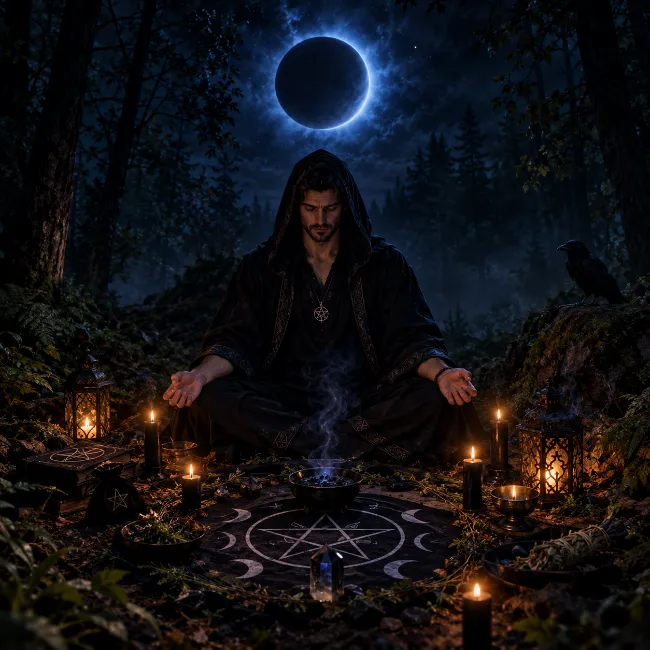
In stillness, the seed begins to grow.
During the new moon, the Moon appears dark from Earth because the side illuminated by the Sun is facing away from us. In spiritual traditions of New Moon Rituals, this phase represents new beginnings, fresh starts, and planting seeds for future growth.
It is a popular time to reflect on what you want to achieve, write down your intentions, and begin new projects.
If you want to try new moon rituals that actually work for your personal goals, use this phase to get clear about what you want and identify the first steps you can take.
New Moon Associations
- Season: Winter
- Elements: Earth and Water
- Colors: Jewel tones, indigo, silver, and black
- Stones: Black moonstone, iolite, amethyst, garnet, black tourmaline, obsidian, onyx, and labradorite
- Rune: Ingwaz ᛝ — associated with seeds, inner potential, and new life
- Botanicals: Cedar, fir, frankincense, garden sage, juniper, lavender, mint, mugwort, nutmeg, patchouli, and star anise
- Rituals: Meditation, stillness, divination, setting intentions, creating sigils, and refreshing your altar
- Menstrual phase association: Menstruation
Read : 2 Powerful Dua for Protection from Khabees & Jinn | Black Magic Protection Dua
2. Waxing Moon (Days 4–14)
Something new is taking shape.
As the Moon becomes more visible, its illuminated portion gradually increases. The waxing moon is traditionally associated with growth, action, progress, and building on the intentions set during the new moon.
This is a good time to turn your plans into practical steps. Whether you’re working toward a personal goal, developing a new habit, or exploring a spiritual practice, focus on consistency and steady progress.
The waxing moon has three main sub-phases: the waxing crescent, when a small crescent becomes visible; the first quarter, when the Moon appears half illuminated; and the waxing gibbous, when more than half of the Moon is illuminated.
Waxing Moon Associations
- Season: Spring
- Elements: Air and Fire
- Colors: Pastels, warm tones, pink, orange, and red
- Stones: Peach moonstone, peach selenite, red aventurine, carnelian, mookaite, citrine, crazy lace agate, and dragon stone (dragon’s blood jasper)
- Rune: Berkano ᛒ — associated with birth, growth, and fertility
- Botanicals: Lemon, orange, rosemary, mint, garlic, ginger, lemon balm, passionflower, carrot, sweet pea, hibiscus, cinnamon, basil, and tomato
- Rituals: Intentional movement, candle gazing, kitchen or food magic, and taking action toward your new moon intentions
- Menstrual phase association: Follicular phase
3. Full Moon (Days 14–18)
Your efforts come into full bloom.
During the full moon, the Moon’s visible face appears fully illuminated from Earth.
Many spiritual traditions associate this phase with completion, celebration, reflection, and releasing what no longer serves you. They perform New Moon Rituals and many other moon rituals for different purpose.
The full moon can be a useful time to review your progress, recognise what you’ve accomplished, and reflect on what needs to change. You can also use this phase for spiritual practices such as meditation, divination, or symbolic release rituals.
Full Moon Associations
- Season: Summer
- Elements: Fire and Water
- Colors: Vivid tones, white, silver, and blue
- Stones: Rainbow moonstone, selenite, mother of pearl, clear quartz, rose quartz, amethyst, citrine, chrysocolla, and green aventurine
- Rune: Sowilo ᛋ — associated with the Sun, willpower, expansion, and success
- Botanicals: Jasmine, ylang-ylang, grapefruit, orange, apple, lemon balm, passionflower, hibiscus, pomegranate, mugwort, dandelion, St. John’s wort, willow, ginger, and tomato
- Rituals: Divination, cleansing baths, charging crystals or ritual tools, making moon water, and safely performing symbolic fire rituals to release old patterns
- Menstrual phase association: Ovulation
4. Waning Moon (Days 18–29.5)
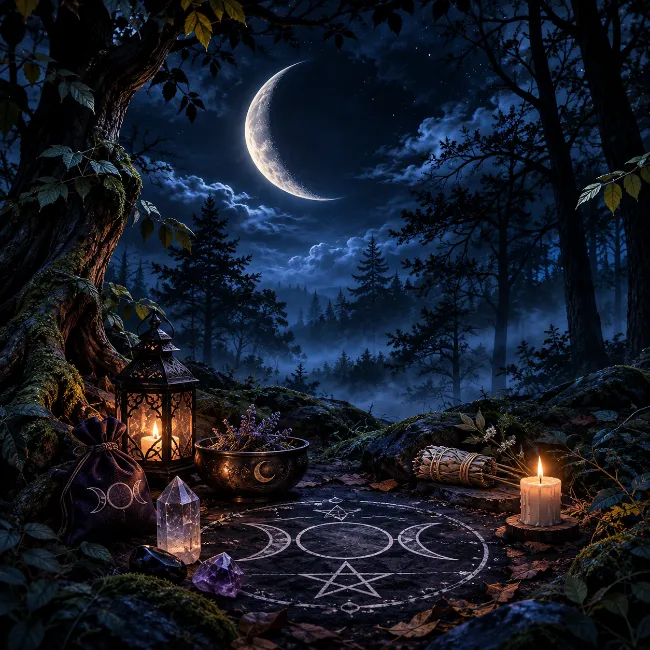
What falls away makes room for what comes next.
After the full moon, the visible illuminated portion gradually decreases until the next new moon.
In many spiritual traditions, the waning moon represents letting go, reflection, cleansing, rest, and releasing habits or situations that hold you back.
This phase offers an opportunity to slow down, review your experiences, and make space for new beginnings.
You might use this time to journal, declutter your surroundings, practise meditation, or reflect on patterns you want to change before the next lunar cycle begins.
The waning moon has three main sub-phases: the waning gibbous, when the Moon is still more than half illuminated; the last quarter, when it appears half illuminated; and the waning crescent, when only a thin crescent remains visible.
Waning Moon Associations
- Season: Autumn
- Elements: Air and Earth
- Colors: Earth tones and cool tones
- Stones: Black tourmaline, black onyx, obsidian, kyanite, smoky quartz, lepidolite, rhodonite, moss agate, and green or blue calcite
- Rune: Eihwaz ᛇ — associated with transition, resilience, and transformation
- Botanicals: Lavender, patchouli, rosemary, cedar, mullein, thyme, nutmeg, clove, lemon balm, basil, juniper, pine, and garden sage
- Rituals: Cleansing, purification, protection practices, intentional movement, yin yoga, journaling, and rest
- Menstrual phase association: Luteal phase
Read : 5+ Powerful Low-Key Banishing Spells To Cleanse Negative Energy with positive results
How to Use the Lunar Cycle for Your Rituals
Each lunar phase offers a different traditional focus. You can use the new moon to set intentions, the waxing moon to take action, the full moon to review your progress, and the waning moon to reflect and let go.
Remember that these spiritual associations are traditions rather than scientifically established effects of lunar energy.
The value of a ritual often comes from the time you spend reflecting, setting clear goals, and following through with practical action.
When practised consistently, New Moon Rituals that actually work can become a meaningful part of your monthly routine, helping you approach new goals with greater clarity and purpose.
Intention-Setting Rituals by Moon Phase
Lunar rituals are personal practices, and you can shape them around your own beliefs, preferences, and intuition. The New Moon Rituals in this guide provide a starting point, but you can adjust the steps, tools, and symbolic meanings to make them your own.
Keeping a journal dedicated to your lunar practice can also be helpful. Record the rituals you perform, the dates, the tools you use, and any thoughts or experiences you notice throughout the lunar cycle.
Over time, these notes can help you understand which practices feel most meaningful to you.
New Moon Rituals That Actually Work: Setting Fresh Intentions
The practice: The new moon is traditionally associated with fresh starts, new opportunities, and personal growth. It is a popular time to begin projects, focus on relationships, or work toward personal changes.
The dark sky can serve as a symbol of a blank canvas where you begin shaping your intentions for the coming weeks.
Step-by-step new moon rituals that work immediately.
- Cleanse your ritual space. Use herbs such as rosemary, juniper, cedar, or garden sage. You can also use incense, room mists, bells, or singing bowls to create a peaceful atmosphere.
- Write down 1–5 clear intentions. Think about what you want to focus on during the coming lunar cycle. If you need inspiration, spend a few minutes meditating or use tarot cards to reflect on your priorities.
- Write your intentions positively. Use clear, present-focused statements that reflect the direction you want to take. For example, write “I manage my money wisely and welcome new opportunities” instead of simply wishing for more money.
- Create a visual reminder. You can make a vision board, draw personal sigils, or collect small objects that represent your goals. This step is optional.
- Light a candle and speak your intentions aloud. A white or silver candle is traditionally associated with clarity and lunar energy. Never leave a burning candle unattended.
- Keep your intentions somewhere meaningful. Place your written intentions on an altar or in your journal and revisit them throughout the lunar cycle. If you follow a tradition that includes symbolic release, you can review the paper at the full moon and safely dispose of it.
Timing tip: Many practitioners prefer to perform new moon rituals within 24–48 hours of the exact new moon. You can check a local lunar calendar to find the correct time.
Waxing Moon Rituals: Building Momentum
The practice: The waxing moon is traditionally associated with growth, action, and progress. This phase is a good opportunity to work on the intentions you set during the new moon. Focus on developing habits, learning new skills, and taking practical steps toward your goals.
Tips for the waxing moon phase
- Review your intentions: Revisit your new moon goals each week and check your progress.
- Choose practical actions: Identify two or three steps you can take toward each intention. Setting an intention is a starting point; consistent action helps you move closer to your goals.
- Create gentle accountability: Set realistic deadlines, schedule check-ins, or track small milestones to stay motivated.
- Work through obstacles: Write down anything holding you back and brainstorm possible solutions. Journaling or tarot cards can help you reflect on different approaches.
Step-by-step waxing moon ritual
- Use your new moon symbols again. If you created sigils during the new moon, you can draw them on paper or incorporate them into your ritual space.
- Light a coloured candle. Green, yellow, and orange are commonly associated with growth, energy, and expansion.
- Speak a few affirmations aloud. Try statements such as “I make steady progress toward my goals” or “I take confident steps toward positive change.”
- Record your progress. Write down what you have done, what you have learned, and which actions you want to take next.
Timing tip: Perform a progress check around the first-quarter moon, when the Moon appears half illuminated. Use this point in the cycle to review your plans and adjust your approach if needed.
Full Moon Rituals: Reflection and Release
The practice: The full moon is traditionally associated with completion, celebration, reflection, and letting go. It can be a meaningful time to recognise your progress, appreciate what is going well, and consider which habits or situations you no longer want to carry forward.
Step-by-step full moon ritual
- Create a relaxing atmosphere. Take a cleansing bath with sea salt and a suitable essential oil, such as lavender or rosemary. Follow the product’s safety instructions, and avoid applying undiluted essential oils directly to your skin.
- Write two lists. Give them the headings “What Has Changed or Grown” and “What I Am Ready to Release.”
- Reflect on your progress. Read your first list aloud and acknowledge the positive changes, lessons, or achievements you have experienced.
- Release what no longer serves you. Read your second list and choose a symbolic way to move forward. You can tear up the paper or, if appropriate, burn it in a suitable fireproof container with proper precautions.
- Prepare your ritual tools. If crystals or other objects are part of your spiritual practice, place them in a safe location where they can receive moonlight. Avoid leaving items outdoors if weather, theft, or damage is a concern.
- Write down your reflections. Record any thoughts, feelings, or insights that came up during the ritual.
Timing tip: You can perform a full moon ritual on the evening of the full moon or around that date if it better suits your schedule. The Moon’s appearance changes gradually, so there is no need to rush.
Read : The Importance of Secrecy in Witchcraft 5 Strange Reason why you should keep your practice secret
Waning Moon Rituals: Releasing and Reflecting
The practice: The waning moon is traditionally associated with endings, reflection, rest, and letting go. As the visible Moon gradually decreases, you can use this period to review the previous weeks, recognise lessons learned, and prepare for the next lunar cycle.
Step-by-step waning moon ritual
- Review the lunar cycle. Think about your intentions, the progress you made, and any changes you experienced.
- Light a candle if you wish. Black or dark blue candles are sometimes used to symbolise completion, protection, and wisdom. Keep the candle on a stable, heat-resistant surface.
- Write two lists. Use the headings “Lessons Learned” and “What I Am Ready to Release.” Write honestly about the habits, thoughts, or situations you want to approach differently.
- Express gratitude for your lessons. Read your reflections aloud and acknowledge what the experiences have taught you.
- Say a release affirmation. You might say, “I appreciate the lessons I have learned, and I am ready to move forward without carrying what no longer serves me.”
- Choose a symbolic way to release the paper. You can tear it up and recycle it, compost it if the materials are suitable, or dispose of it responsibly. Avoid burying materials or putting paper into natural waterways.
- Journal about your experience. Note any recurring patterns, useful lessons, or changes you want to make during the next cycle.
- Rest and refresh your space. Tidy your surroundings, take a few deep breaths, and give yourself time to relax before setting new intentions.
Timing tip: The last-quarter moon is a useful point to review your progress and reflect on what you want to leave behind before the next new moon.
Creating a Sustainable New Moon Rituals Practice
Building Your Lunar Toolkit
You do not need expensive tools or an elaborate setup to perform meaningful lunar rituals. Start with a few items that help you focus and create a peaceful atmosphere. Add other tools only if they support your personal practice.
Lunar ritual toolkit
- Lunar calendar or tracking app: Helps you follow the Moon’s phases and plan your rituals.
- Journal: A dedicated place to record intentions, reflections, and progress.
- Candles: White, silver, black, or colours associated with your chosen lunar phase.
- Crystals: Moonstone, selenite, labradorite, clear quartz, or other stones that hold personal meaning for you.
- Cleansing materials: Incense, room sprays, suitable herbal bundles, singing bowls, or bells.
- Fireproof container: Useful if your spiritual practice includes burning paper or other suitable materials safely.
You can begin with just a journal and a quiet place to sit. The most important part is choosing a practice you can follow comfortably and consistently.
Track Your New Moon Rituals
A lunar journal can help you understand your intentions and reflect on how your habits and choices change over time. After each ritual, consider recording:
- The intentions you set during the new moon.
- Your emotions and reflections during the full moon.
- The actions you took toward your goals.
- Meaningful coincidences or experiences you noticed throughout the cycle.
- Patterns that appear across several lunar cycles.
Review your notes every few months. Look for practices that help you feel more focused, calm, or motivated, and notice which goals need a more practical plan.
Remember that recording an experience does not prove that the Moon caused it. Your journal is primarily a tool for reflection, self-awareness, and personal growth.
Combining Lunar Rituals with Other Practices of New Moon Rituals
You can combine lunar rituals with other activities to make your practice more personal and meaningful.
- Meditation: Spend 5–15 minutes breathing quietly before beginning your ritual. This can help you settle your thoughts and focus on your intentions.
- Intentional movement: Try gentle stretching, yoga, swimming, or mindful walking to reconnect with your body.
- Tarot or oracle cards: Use a card reading as a prompt for reflection when setting intentions or reviewing your progress.
- Astrology: If you follow astrology, note the zodiac sign associated with the new moon or full moon and use its traditional symbolism as inspiration.
- Journaling: Write throughout the lunar cycle to explore your thoughts, recognise patterns, and keep track of your goals.
These New Moon Rituals practices are optional. Choose the ones that suit your needs rather than trying to include everything in every ritual.
Common Moon Ritual Mistakes to Avoid during New Moon Rituals
1. Setting too many intentions: Writing a long list of wishes can make it difficult to decide where to focus your attention. Start with three to five clear, related intentions instead. Choose goals that matter to you and that you can work toward through realistic actions.
2. Ignoring the natural lunar cycle: Traditional lunar practices often connect different phases with different activities.
For example, the new moon is associated with beginnings, the waxing moon with growth, the full moon with reflection and completion, and the waning moon with release.
You can also explore traditional full moon names, such as the Strawberry Moon or Buck Moon, which are associated with particular times of the year in some naming traditions.
If astrology is part of your practice, the zodiac sign associated with a new or full moon can provide another source of symbolic inspiration.
3. Forcing yourself to feel positive: Not every ritual needs to feel uplifting. The new and waning moon phases can be opportunities to slow down, reflect, and acknowledge difficult emotions.
Instead of forcing yourself to think positively, give yourself room to recognise what you feel and consider what you need.
4. Forgetting practical action: Setting intentions can help you clarify what matters, but it does not guarantee that your wishes will come true.
If you want to improve your finances, relationships, career, or personal habits, connect your intentions with specific steps you can take in everyday life.
5. Treating lunar timing as a strict rule: You do not need to perform every ritual at the exact moment of a particular moon phase.
If you miss the new moon, you can still reflect on your goals and begin working toward them. Consistency and personal meaning matter more than following a perfect schedule.
Advanced Moon Phase Techniques
Making Moon Water
Moon water is water placed under moonlight as part of a spiritual or symbolic New Moon Rituals practice. Some practitioners associate it with lunar energy and use it in rituals, baths, or to cleanse ritual objects.
Different moon phases are traditionally connected with different intentions:
- New moon water: Symbolises fresh starts and new intentions.
- Waxing moon water: Represents growth, creativity, and forward movement.
- Full moon water: Often used in rituals for gratitude, reflection, and symbolic blessings.
- Waning moon water: Associated with release, cleansing, and letting go.
These associations are based on spiritual beliefs rather than established scientific effects.
How to make moon water
- Fill a clean container with water. Use drinking-quality water if you intend to consume it. A clean glass jar is a common choice.
- Place the container where it can receive moonlight. You can use a secure outdoor location or a windowsill. The Moon does not need to be directly visible for you to carry out the symbolic practice.
- Set an intention. Take a moment to think about the purpose of your moon water. If you use sigils or crystals in your practice, you can place them nearby as symbolic reminders.
- Leave the container in a safe location. You can leave it for a few hours or overnight, provided it remains protected from contamination, animals, and weather.
- Store it appropriately. Keep the water covered and refrigerated if you plan to use it for drinking. Use clean, drinking-safe water and containers, and do not consume water that may have been contaminated. For spiritual use only, label the container clearly and keep it separate from drinking water.
You can use moon water in symbolic rituals, add it to a bath if the water and any ingredients are skin-safe, or use it to water suitable plants. Treat it as a meaningful part of your spiritual practice rather than a substance with proven supernatural or healing effects.
Read : 5 Powerful prayers for protection from evil that work like a magic
Spiritual side of full moon rituals conclusion
New Moon Rituals that actually work do not need to be complicated.
Start with a clear intention, create a peaceful space, write down what you want to achieve, and choose practical actions that support your goal.
As the lunar cycle continues, use the waxing moon to build momentum, the full moon to review your progress, and the waning moon to reflect on what you want to change.
The best ritual is one that feels meaningful to you and helps you approach your goals with greater clarity, patience, and purpose. Make it your own, keep track of your experiences, and allow your practice to develop naturally over time.
Frequently Asked Questions About New Moon Rituals That Actually Work
1. What are the best new moon rituals that actually work?
The best new moon rituals are simple practices that help you set clear intentions and focus on your goals. Start by finding a quiet space, taking a few deep breaths, and writing down three specific intentions for the coming lunar cycle. You can light a candle, meditate, or create a vision board if you wish. For the best results in everyday life, connect each intention with a practical action you can take toward your goal.
2. How do you perform a new moon ritual for beginners step by step?
To perform a new moon ritual as a beginner, follow these simple steps:
Find a quiet place where you can relax without interruptions.
Cleanse your space by tidying it or using a method that feels meaningful to you.
Take a few slow breaths to settle your mind.
Write down one to three clear intentions for the coming month.
Read your intentions aloud and visualise yourself taking steps toward them.
Keep your written intentions in a journal and review them throughout the lunar cycle.
You do not need expensive crystals, special equipment, or previous experience to begin.
3. What should I write down during a new moon ritual?
During a new moon ritual, write down intentions that reflect what you want to develop, improve, or welcome into your life. You might focus on personal growth, career opportunities, financial habits, relationships, or emotional well-being. Make your intentions specific and positive. For example, instead of writing “I want a better career,” write “I am developing my skills and taking steps toward a career that suits my goals.” Choose intentions that you can support through your own actions.
4. When is the best time to perform a new moon ritual?
Many spiritual practitioners prefer to perform a new moon ritual on the day of the new moon or within the following 24 to 48 hours. However, there is no scientifically established time when a ritual becomes more effective. Check a reliable lunar calendar for the exact new moon date and time in your location, whether you live in the UK or the USA. Choose a time when you can relax, reflect, and focus on your intentions without distractions.
5. Do new moon rituals really work for manifestation?
New moon rituals can help with manifestation by giving you a regular opportunity to clarify your goals, focus your attention, and plan practical steps toward achieving them. Writing intentions and reviewing your progress may help you stay motivated and recognise opportunities. However, there is no reliable scientific evidence that the new moon itself makes wishes come true or guarantees specific outcomes. Treat the ritual as a personal spiritual practice and combine it with consistent action to support your goals.
Follow Us & Stay Connected
Enjoyed this article? Follow us for more fascinating stories, mysteries, spirituality and the unexplained.